



Concrete Pouring in Avondale, AZ

Slabs, driveways, RV pads, and decorative concrete across Avondale.

Serving Avondale & nearby Maricopa County

Get Your Free Concrete Pouring Estimate

Step 1 of 5Project

What kind of project?

Pick the option that fits best — you can add details next.

Quick Answer: Concrete Pouring in Avondale

ProWorx Restoration provides concrete pouring across Avondale, AZ — driveway replacements, patio extensions, RV pads, ADU footings, and stamped / broom finishes in Garden Lakes, Rancho Santa Fe, and Coldwater Springs. Typical projects run $7 – $16/sf.

1,200+

Projects Completed

15+

Years Experience

ROC #349454

Licensed & Insured

100%

Satisfaction Guaranteed

Concrete Pouring Built for Avondale Homes
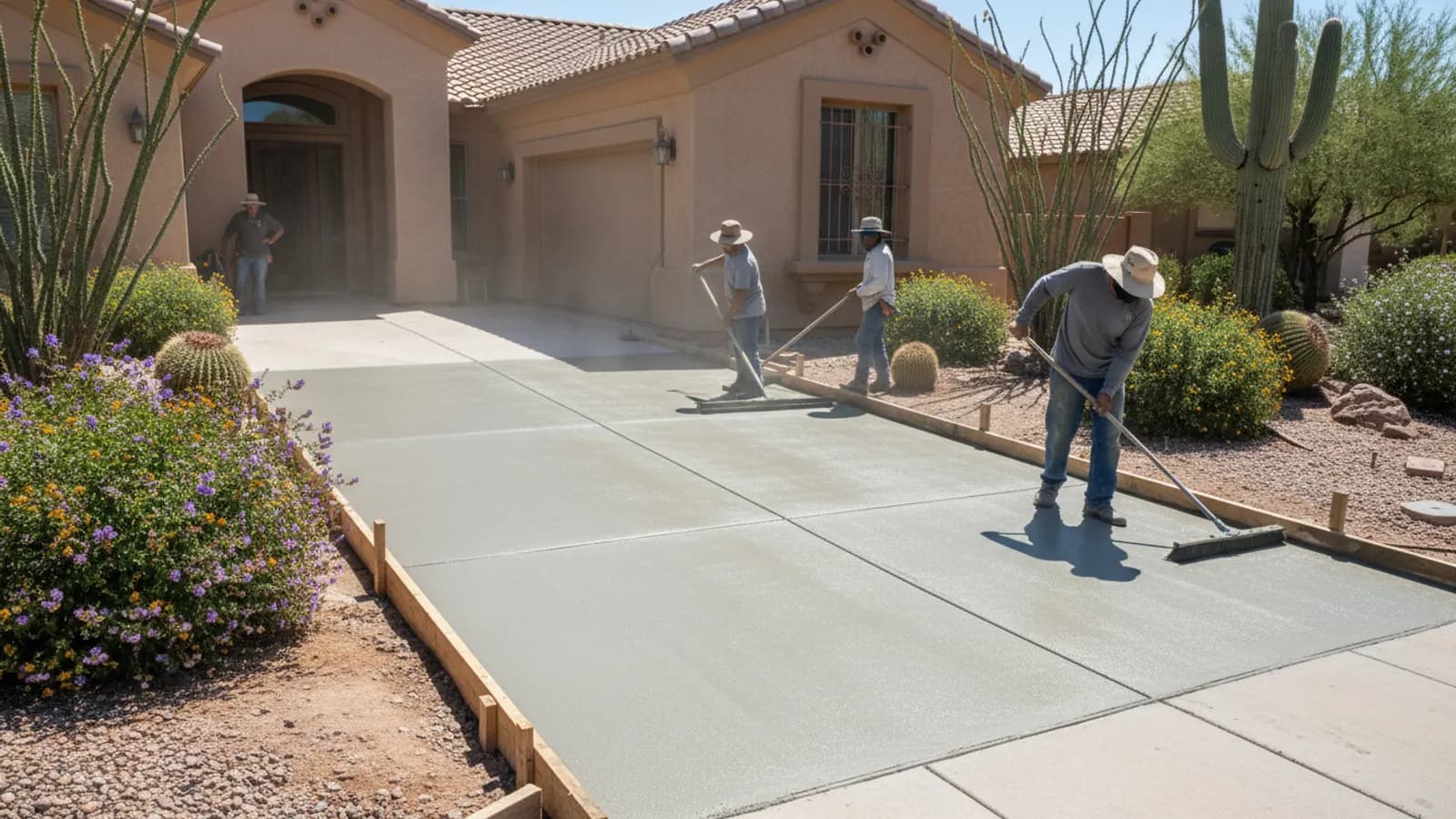
Freshly poured concrete driveway being screeded and floated between forms in a Avondale, Arizona home
Avondale's mid-1990s through mid-2010s housing stock drives steady driveway replacement and patio extension volume — most original drives are now 20–30 years old.
Larger lots in Donatela and Alamar drive RV pad work for 5th-wheels and Class A motorhomes.
Pre-dawn pour scheduling May–September is standard.

Why Avondale Concrete Pouring Is Different

Mid-1990s+ tract driveways aging into the replacement window.
Avondale Building Safety: ROW permit on driveway, building permit on footings.
Pre-dawn pour scheduling May–September.

Recent Concrete Pouring Projects in Avondale

Garden Lakes

Driveway tear-out + replace 760 sf, broom, 4,000 psi w/ fiber mesh, ROW permit

$11K6 days

Rancho Santa Fe

Covered patio extension footings + 460 sf stamped slate slab, integral color

$13K9 days

Donatela

RV pad 14′x38′ + apron tie-in, 6″ slab, #4 rebar 12″ OC

$12K7 days

Concrete Pouring in Avondale: Fast Facts

Driveway replacement: ~45% of Avondale volume.

Patio extension / decorative: ~25%.

RV pad: ~15%.

Average Avondale concrete project: $8,000–$20,000.

ROW permit on every driveway replacement.

Typical Cost

$1,500 – $25,000+

Typical Timeline

3 days – 3 weeks

Permit Lead Time

2–4 weeks

How We Approach Concrete Pouring

ProWorx Restoration pours residential and commercial concrete across the Phoenix metro — foundations, driveways, patios, walkways, RV pads, equipment slabs, and decorative finishes. We hold Arizona ROC #349454 and self-perform formwork, reinforcement, placement, and finishing with crews experienced in hot-weather pours.
Pouring concrete in Arizona means working against ACI 305 hot-weather conditions for most of the year. Surface temperatures above 110°F flash-cure the top of a slab before the bottom sets, causing plastic shrinkage cracks. We pour at dawn (often 4–6 AM in summer), use Type II low-alkali cement, ice-chilled water, retarding admixtures, evaporation-reducing aggregates, and wet-cure or curing-compound applications. Expansive clay soils in parts of north Scottsdale, Cave Creek, and the East Valley require engineered subgrade prep and proper joint placement to control inevitable shrinkage.

Foundation slabs: slab-on-grade, monolithic, and post-tension coordination

Driveways and approaches (5–6" thick with #4 rebar at 18" OC)

Patios, walkways, RV pads, equipment and HVAC slabs

Decorative: stamped, exposed aggregate, integral color, broom and salt finishes

Hot-weather pours per ACI 305 with ice, retarders, and dawn placement

Engineered subgrade prep and control-joint layout for expansive soils

What Avondale Homeowners Should Know About Concrete Pouring

Choosing the Right Thickness

Slab thickness depends on its use. Walkways and patios carry relatively light loads, while driveways and RV pads must support vehicles and require thicker concrete and appropriate reinforcement. Using the correct thickness prevents premature cracking and failure.

Reinforcement Options

Steel reinforcing bar, wire mesh and fibres can be added to concrete to improve its performance. Reinforcement helps hold cracks together and increases resistance to loads, which is particularly important for driveways and slabs that support vehicles. The right reinforcement depends on the slab's purpose and thickness.

Why Curing Matters

Concrete continues to gain strength for weeks after it is placed, but only if it retains enough moisture to cure properly. Keeping the surface moist, using curing compounds or covering the slab helps prevent premature drying. Proper curing reduces cracking and improves strength and durability, which is especially important in Arizona's dry climate.

Spalling Brick and Block

Spalling occurs when the face of a brick or block flakes, chips or breaks away. It is often caused by moisture moving through the masonry, combined with salt crystallisation or temperature changes. Repairing spalled units may involve replacing individual bricks or blocks and addressing the moisture source that caused the damage in the first place.

Repointing Mortar Joints

Mortar joints deteriorate over time, becoming cracked, crumbly or recessed. Repointing removes deteriorated mortar to a consistent depth and replaces it with fresh mortar, restoring the joint's strength and weather resistance. The new mortar should be compatible with the existing masonry, and matching colour and joint profile helps the repair blend in.

When to Rebuild Instead of Repair

If a wall is leaning significantly, has extensive cracking or was built with an inadequate footing, rebuilding may be safer and more cost-effective than repeated repairs. Rebuilding allows a proper footing and reinforcement to be installed, giving the wall a much longer service life.

Repairing Versus Replacing Concrete

Minor cracks and surface wear can sometimes be repaired or resurfaced, but slabs with significant settlement, heaving or extensive cracking may need replacement. Evaluating the cause of damage determines whether repair will last.

Materials & Standards We Use

Concrete per ASTM C94 ready-mix delivery, 3,000–4,000 psi as scope warrants. Type II low-alkali cement standard for Arizona sulfate-rich soils. Reinforcement per ACI 318 — #4 rebar for driveways and structural slabs, welded wire mesh for patios. Hot-weather pour procedures per ACI 305. Curing per ACI 308. Control joints per ACI 224 spacing rules. Decorative integral colors from Davis Colors or Solomon. All work permitted where required and warrantied under ROC #349454 for material and workmanship.

RV Pads and Side-Yard Slabs

Many Arizona homeowners add concrete pads beside their homes for RVs, boats or extra parking. These slabs need to support heavy loads, so they require proper thickness and reinforcement. HOA rules and setbacks may also affect where RV pads can be located and how they must be screened.

Cleaning Masonry Safely

Masonry can be stained by dirt, efflorescence, rust, algae or paint. Cleaning methods must be appropriate for the material, since aggressive pressure washing or harsh acids can damage brick, block and mortar. Gentle methods tested in an inconspicuous area first protect the masonry while removing stains.

Driveways

A concrete driveway must withstand vehicle loads, heat and occasional heavy rain. Proper subgrade preparation, adequate thickness, reinforcement, control joints and drainage away from the house all contribute to a driveway that lasts for decades.

Sealing Masonry

Breathable masonry sealers can help reduce water absorption while allowing moisture inside the wall to escape. Sealers are not appropriate for every situation, and non-breathable coatings can trap moisture and cause damage. Choosing the right product depends on the type of masonry and its exposure.

Common Masonry Issues in Phoenix-Metro Properties

Five patterns dominate. Mortar deterioration along south and west elevations from UV and thermal cycling. Step cracking through brick courses from foundation settlement on expansive soils. Brick spalling from moisture entering cracked joints. Efflorescence from sulfate-rich groundwater wicking through CMU site walls. And on 1920s–1960s downtown Phoenix and Mesa brick, hard Portland-cement patches done in the 80s–90s now causing the softer original brick to spall around the patches. Each pattern needs a different repair — we don't apply a universal fix.

Pool Barrier Walls

Block walls frequently serve as pool barriers, and gaps, damage or climbable features can compromise safety. Repairs should maintain the required barrier height and integrity. Pool barrier requirements vary by jurisdiction, so any changes should be checked against local rules.

Efflorescence on Masonry

White, powdery deposits on masonry are called efflorescence. They form when water carries dissolved salts to the surface and evaporates. Efflorescence can usually be cleaned off, but its presence shows that water is moving through the wall, and that moisture source should be identified and corrected to prevent recurring deposits and potential damage.

How Our Concrete Pouring Process Works in Avondale

01

Free On-Site Consultation

We visit your property, discuss your goals, and provide a detailed, no-obligation estimate.

02

Custom Project Plan

Our team creates a tailored project plan with timeline, materials, and transparent pricing.

03

Licensed Crews On Site

Licensed craftsmen complete your project with quality materials and meticulous attention to detail.

04

Final Walkthrough & Sign-Off

We inspect every detail with you and ensure complete satisfaction before the job is done.

"Driveway tear-out and replace in Garden Lakes — six days, broom finish, no cracks two years in. Crew was clean and on schedule."

ProWorx Client · Avondale

Neighborhoods We Serve in Avondale

Garden Lakes · Rancho Santa Fe · Coldwater Springs · Donatela · Old Town Avondale · Las Ligas · Alamar

Concrete Pouring FAQs for Avondale Homeowners

Concrete Pouring Guides for Avondale Homeowners

Practical reading from our team before you commit to a project.

Ready to Start Your Avondale Concrete Pouring Project?

Get a free, no-obligation estimate from a licensed Arizona contractor — ROC #349454.