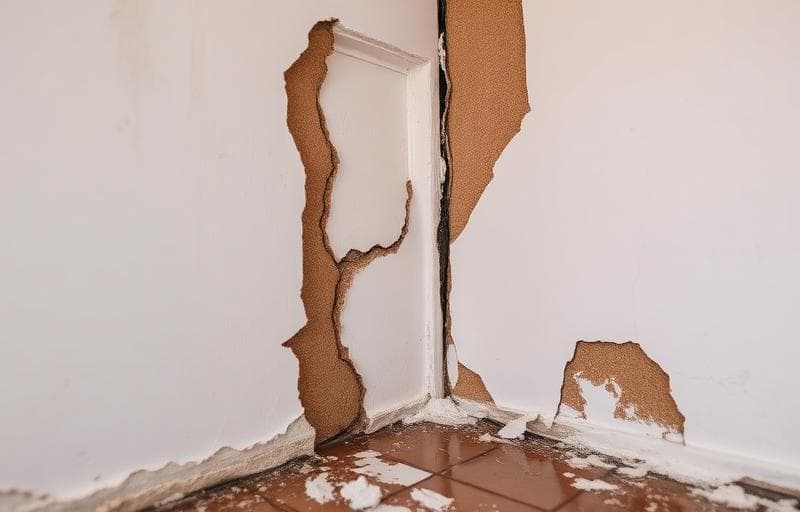




When your Mesa home suffers damage from fire, water, storms, or other covered events, dealing with insurance can feel as stressful as the damage itself. Understanding the process helps you get fair compensation and faster restoration.
ProWorx Restoration provides insurance restoration services and works directly with insurance companies throughout the claims process.
Step 1: Document Everything Immediately
Before cleaning up or making repairs, document the damage thoroughly:
- Take photos and videos of every damaged area from multiple angles
- Document serial numbers of damaged appliances and electronics
- Create a written inventory of damaged personal property
- Save any receipts for emergency expenses (hotel, food, temporary repairs)
- Keep damaged items — don't throw anything away until your adjuster approves
Step 2: Contact Your Insurance Company
Report the claim as soon as possible. Most policies require "prompt notice" of damage. When you call:
- Get your claim number and adjuster contact information
- Ask about your policy's coverage limits and deductible
- Request a copy of your full policy if you don't have one
- Ask about Additional Living Expenses (ALE) coverage if your home is uninhabitable
Step 3: Prevent Further Damage
Your policy requires you to take reasonable steps to prevent additional damage. This includes:
- Tarping damaged roofs
- Board-up of broken windows and doors
- Water extraction for active flooding
- Turning off utilities if necessary
Keep receipts for all emergency repairs — they're typically covered by your policy. For fire and water damage emergencies, acting quickly prevents exponentially worse damage.
Step 4: Get a Professional Damage Assessment
Don't rely solely on your insurance adjuster's assessment. Get an independent evaluation from a licensed restoration contractor. At ProWorx Restoration, our assessments include:
- Detailed scope of damage documentation
- Moisture mapping for water damage
- Structural integrity evaluation
- Line-item repair estimates using industry-standard pricing
Step 5: Meet with Your Insurance Adjuster
When your adjuster visits:
- Be present for the inspection
- Share your documentation and photos
- Point out all damage — adjusters can miss hidden issues
- Have your contractor's estimate available for comparison
- Don't sign anything you don't fully understand
Common Insurance Claim Mistakes
- Waiting too long to file: Delays can result in claim denial
- Incomplete documentation: Missing photos or inventory leads to lower settlements
- Accepting the first offer: Initial estimates are often lower than actual repair costs
- Making permanent repairs before approval: Only do emergency mitigation until your claim is approved
- Not understanding your policy: Know the difference between Actual Cash Value (ACV) and Replacement Cost Value (RCV)
Types of Damage Covered by Standard Homeowner's Insurance
- Typically covered: Fire, smoke, wind, hail, lightning, burst pipes, vandalism
- Usually NOT covered: Flood (requires separate policy), earthquake, gradual wear, mold from neglect
- Varies by policy: Sewer backup, foundation damage, pool damage
For monsoon-related damage specifically, check our monsoon damage prevention guide.
How ProWorx Restoration Helps with Insurance Claims
We simplify the process by:
- Providing detailed documentation that supports your claim
- Communicating directly with your insurance adjuster
- Using Xactimate — the same estimating software your insurance company uses
- Handling supplemental claims when hidden damage is discovered
- Managing the entire restoration from cleanup to reconstruction
Contact us immediately after damage occurs — early involvement leads to smoother claims and faster restoration.
The First Twenty-Four Hours
What you do immediately after discovering damage shapes the entire claim. Make the property safe first, then stop the source if you can do so safely, whether that means closing a fixture valve or the main water shut-off. Then photograph and video everything before anything is moved, cleaned or thrown away.
Only after that should cleanup begin. Insurers rely heavily on documentation of the original condition, and once a room has been cleared it cannot be recreated. Report the claim promptly, because most policies require timely notice.
Your Duty to Mitigate
Nearly every property policy requires the policyholder to take reasonable steps to prevent further damage after a loss. That means starting water extraction, tarping a damaged roof, or boarding an opening, rather than waiting for an adjuster to visit.
Delaying mitigation can allow damage to spread and may give the insurer grounds to reduce payment for the additional damage. Keep receipts for emergency expenses, since those costs are normally considered part of the claim.
What the Adjuster Does
The adjuster inspects the damage, determines what the policy covers and prepares an estimate of the repair cost. They work for the insurer. That does not make them adversarial, but it does mean their estimate reflects their assessment rather than a negotiation you have participated in.
Being present during the inspection is useful. Point out damage that is not obvious, mention anything that happened during the event, and make sure areas beyond the immediately visible damage are examined. Ask for a copy of the written estimate rather than only a summary figure.
Reading the Estimate
Insurance estimates are written line by line, with quantities, unit prices and often separate figures for material, labour and overhead. Depreciation is usually listed separately, which is what produces the difference between replacement cost and actual cash value.
Compare the line items against what the work actually requires. Missing items are common, particularly where damage is hidden behind finishes. A contractor who prices in the same line-item format makes discrepancies obvious rather than turning the discussion into one lump sum against another.
Supplements When Hidden Damage Appears
Demolition routinely reveals damage nobody could see during the initial inspection: water that travelled further through wall cavities, framing weakened beneath flooring, or electrical affected by heat. These additional items are handled through supplements, submitted with photographs, measurements and documentation.
Supplements are a normal part of restoration work rather than a sign something has gone wrong. What makes them straightforward is documentation recorded as the work proceeds, which is one reason to use a contractor experienced with insurance claims.
Recoverable Depreciation
If your policy pays replacement cost, the insurer typically releases the actual cash value first and holds back the depreciation. That withheld amount, called recoverable depreciation, is released once repairs are completed and documented.
This catches homeowners out when they plan the budget around the first cheque. Understanding the two-stage structure in advance, and keeping invoices and completion documentation, is what ensures the second payment actually arrives.
If You Disagree
Disputes over scope or amount are common and usually resolvable with evidence rather than argument. Detailed photographs, moisture readings, contractor estimates and manufacturer specifications all carry weight. Many policies also contain an appraisal clause, a defined process for resolving disagreements about the amount of a loss without litigation.
Public adjusters, who represent policyholders for a percentage of the settlement, are an option for complex or large claims. Before signing, understand the fee and confirm the adjuster is licensed in Arizona.
Choosing Your Own Contractor
Insurers frequently recommend contractors from a preferred programme, sometimes strongly. In Arizona the choice is yours, and it is worth making deliberately. A preferred contractor may be entirely competent, but their ongoing relationship is with the insurer, and some homeowners prefer a contractor whose only obligation is to them.
Whoever you choose, confirm the Arizona ROC licence is active and covers the work, ask for proof of liability and workers' compensation insurance, and require a written, itemised scope rather than a lump sum. Be cautious about signing broad authorisations or assignment-of-benefits documents without reading them properly, particularly in the stressful hours straight after a loss.
Mesa-Specific Claim Scenarios
The claims we see most often in Mesa follow local patterns. Monsoon storms drive rain under roofing and cause interior water damage. Air-conditioning condensate overflows from attic units damage ceilings, often during the hottest weeks when the system runs almost continuously. Aging supply lines and water heaters fail in homes built during the 1970s and 80s. Seasonal residents return to find a leak that has run for weeks.
Each of these has a different coverage profile, and documenting the cause accurately matters as much as documenting the damage.