


Arizona homeowners face some of the highest cooling costs in the nation. With summer temperatures regularly exceeding 110°F, your HVAC system works overtime from May through October. Strategic energy efficiency upgrades can dramatically reduce these costs while increasing your home's value and comfort.
The Biggest Energy Wasters in Mesa Homes
Before investing in upgrades, understand where your energy goes:
- Cooling (HVAC): 50–60% of total energy costs in Arizona
- Water heating: 15–20%
- Lighting and electronics: 10–15%
- Appliances: 10–15%
Clearly, reducing cooling costs delivers the biggest impact for Mesa homeowners.
1. Attic Insulation — Best ROI Upgrade
Most Mesa homes built before 2000 have insufficient attic insulation. Upgrading to R-38 or R-49 insulation can reduce cooling costs by 20–30%.
- Cost: $1,500–$3,500 for a typical Mesa home
- Savings: $300–$600 per year on cooling
- Payback period: 3–5 years
2. Low-E Windows
Single-pane and older dual-pane windows allow enormous heat transfer. Low-E (low emissivity) windows with argon gas filling block solar heat while allowing natural light.
- Cost: $300–$800 per window installed
- Savings: 15–25% reduction in cooling costs
- Bonus: Reduces UV damage to furniture and flooring
Window upgrades pair well with a home renovation project.
3. Smart Thermostat
A programmable or smart thermostat optimizes cooling schedules based on your habits, reducing waste when you're away or sleeping.
- Cost: $150–$400 installed
- Savings: 10–15% on cooling costs
4. Shade Structures and Exterior Shading
Reducing solar heat gain before it reaches your walls and windows is more effective than fighting it with AC. Consider:
- Patio covers on south and west-facing walls
- Shade screens on windows (block up to 80% of solar heat)
- Strategic tree planting for long-term shade
- Light-colored exterior paint and roof coatings — see our painting guide
5. Duct Sealing and Insulation
Leaky ductwork can waste 20–30% of your cooled air. Sealing and insulating ducts — especially those running through unconditioned attic space — is one of the most cost-effective efficiency upgrades.
- Cost: $500–$2,000
- Savings: 15–25% on cooling costs
6. High-Efficiency HVAC System
If your AC unit is 10+ years old, modern high-efficiency systems use 30–50% less energy. Look for SEER2 ratings of 16+ for Arizona climate performance.
7. Ceiling Fans
Ceiling fans allow you to raise your thermostat by 4°F without reducing comfort — saving approximately 10% on cooling costs. Professional fan installation ensures proper sizing and placement.
Energy Efficiency and Home Value
Energy-efficient homes sell faster and for higher prices in Arizona's market. Buyers increasingly prioritize low utility costs, especially as energy prices rise. These upgrades deliver both immediate savings and long-term home value increases.
Get Started with Energy Efficiency Upgrades
ProWorx Restoration handles insulation, window installation, wall improvements, and more as part of our comprehensive remodeling services. Schedule a consultation and we'll identify the highest-impact efficiency upgrades for your Mesa home.
In Mesa, Cooling Is the Whole Game
Efficiency advice written for most of the country is built around heating. In Mesa the opposite applies: the dominant cost is keeping heat out from roughly May to October, and almost nothing else on the bill compares.
That reorders the priority list. Attic insulation, duct sealing, air sealing and shading matter far more here than they would in a cold climate, and upgrades aimed at retaining warmth deliver very little.
The Attic First, Always
Attic temperatures in a Mesa summer run far above outdoor air, and that heat sits directly above your ceiling. Insulation there returns more per dollar than almost any other improvement.
Check the existing depth with a tape measure. Homes built decades ago frequently have far less than current recommendations, and insulation settles and compresses over time. Topping it up is usually straightforward, provided the existing layer is dry and undamaged.
Air Sealing Before Insulation
Insulation slows heat moving through materials; it does nothing about air moving through gaps. Recessed light fixtures, plumbing and wiring penetrations, the attic hatch and the top plates of interior walls all let conditioned air escape upward and superheated attic air pour down.
Sealing those penetrations first is what makes insulation perform as rated, and it is inexpensive relative to the insulation itself. It is also the step most commonly skipped.
Ductwork in the Hottest Part of the House
In most Mesa homes the air-conditioning ducts run through the attic, which means cooled air travels through the hottest space in the building before reaching any room. Ducts that leak or lack insulation lose a substantial share of the cooling you have already paid for.
Leaking return ducts are worse still, because they actively draw superheated attic air into the system. Sealing joints and insulating runs is often more valuable than another few inches of ceiling insulation.
Windows, Shading and Where Heat Enters
West-facing glass is the single worst heat source in most Mesa houses, because late afternoon sun arrives low and direct when the day is already hottest. Low-E glazing with a low solar heat gain coefficient reduces that substantially.
Window replacement is expensive, so cheaper interventions deserve consideration first: exterior shade screens, awnings, solar film, and planting or structures that shade west walls. Exterior shading beats interior blinds, because it stops heat before it enters the glass.
The Air Conditioner Itself
Efficiency ratings have improved considerably, and a system more than fifteen years old is likely costing noticeably more to run than a modern replacement. Correct sizing matters as much as the rating: an oversized unit short-cycles, cooling the air without running long enough to manage humidity or distribute evenly.
Variable-speed equipment runs longer at lower output, which produces more even temperatures and better efficiency than older on-off systems. Replacement is a significant expense, so it is worth planning rather than reacting to a failure in July.
Water Heating and Hard Water
Water heating is usually the second largest energy cost after cooling. Arizona's hard water accelerates the problem, because scale accumulates on heating surfaces and insulates them, making the unit work harder and fail sooner.
Flushing the tank periodically is the single most valuable maintenance task. Beyond that, insulating the first few feet of hot water pipe, lowering the thermostat to a sensible setting and considering a heat pump water heater, which is well suited to a hot garage, all reduce consumption.
Solar, and What to Do First
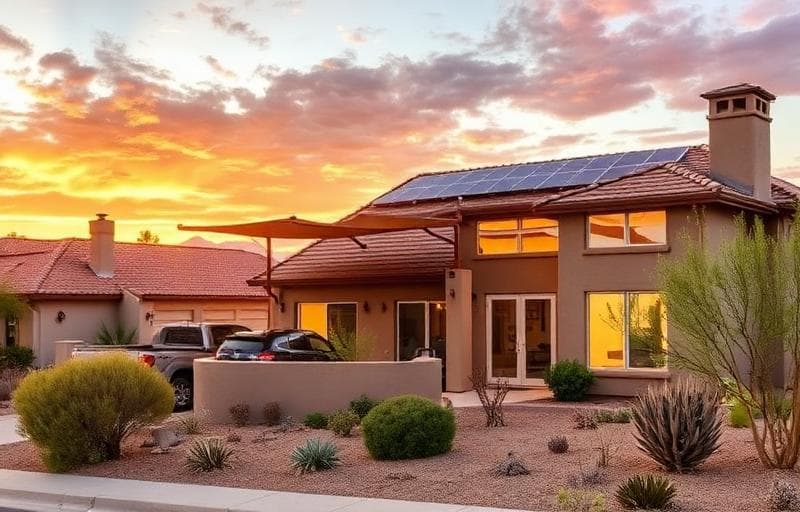
Arizona's solar resource is excellent and adoption is high. The common mistake is installing panels on an inefficient house, which means paying to generate power that is being wasted through an uninsulated attic and leaking ducts.
Doing the envelope work first reduces the system size needed, which reduces its cost. Roof condition matters too: if the roof is within a few years of replacement, replacing it before panels go on avoids an expensive removal and reinstallation later.
Where to Start With a Limited Budget
If you can only do a few things, the order is usually air sealing, attic insulation, duct sealing, then shading on west-facing glass. All four are comparatively inexpensive, none require replacing equipment, and together they reduce the load on whatever air conditioner you have.
Equipment replacement and windows come after that, ideally planned rather than forced by failure. Starting with the envelope also means that when you do replace the air conditioner, you may be able to size it smaller.
Rebates and Utility Programmes
Arizona utilities periodically offer rebates for efficiency upgrades including insulation, duct sealing, high-efficiency air conditioning and smart thermostats, and federal tax credits have been available for certain improvements. Programmes change, so checking what is current before committing is worthwhile.
Many require the work be performed by a participating contractor or verified afterwards, so confirm eligibility before starting rather than discovering a requirement was missed. A rebate rarely changes whether an upgrade is worth doing, but it can change the order you tackle them in.
Measuring Before and After
It is worth knowing whether an upgrade worked. Keeping twelve months of utility bills before the work gives you a baseline, and comparing against the same months the following year accounts for seasonal variation. Weather differs year to year, so the comparison is indicative rather than exact.
A professional energy audit, which may include blower door testing and thermal imaging, identifies where a specific house is actually losing efficiency rather than relying on general assumptions. In an older Mesa home that frequently reveals priorities nobody expected.