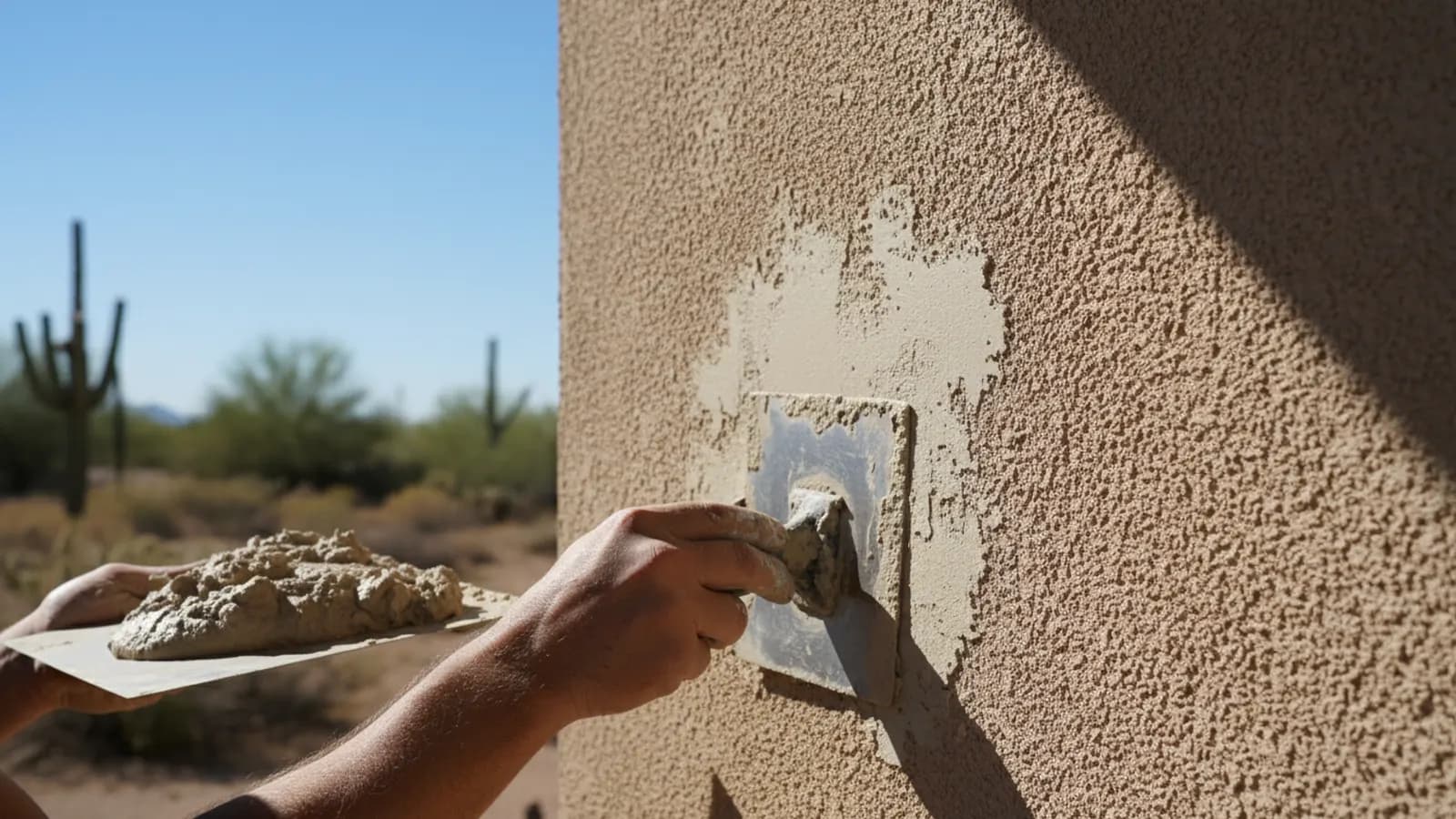
Our Stucco Repair Process in Arizona
Every repair starts with diagnosing the crack type. Hairline thermal cracks (under 1/16") get elastomeric patch and topcoat. Wider structural cracks (1/16"–1/4") are V-grooved, primed, and patched with polymer-modified cement before texture and color match. Suspected moisture intrusion gets a moisture-meter scan and, when warranted, a cut-and-inspect of the underlayment and weep screed. Re-stucco follows the traditional three-coat sequence: scratch (3/8"), brown (3/8"), and color/finish coat — with cure time between each coat. Color is matched from physical samples, not photos, because Arizona UV shifts pigment fast.
Common Stucco Issues in Phoenix-Metro Homes
Four issues drive most calls. First, south and west elevation pattern cracking from UV and 40°F daily thermal cycling. Second, diagonal corner cracks at windows and doors from minor frame movement and missing diagonal lath reinforcement. Third, monsoon-driven moisture intrusion at failed sealant joints around windows, hose bibs, and electrical penetrations — water gets behind stucco and rots sheathing. Fourth, on 1990s–2000s tract homes, undersized or missing weep screeds at the foundation that trap moisture. We address the root cause, not just the visible crack.
Materials & Standards We Use
Three-coat stucco per ASTM C926 and ASTM C1063 (lath). Color coats are acrylic-modified for UV durability or integral-color cement for traditional look. Elastomeric topcoats meet ASTM D6083 for crack bridging on hairline-cracked walls. Sealants at stucco-to-window and stucco-to-trim joints are polyurethane or hybrid (Sikaflex, OSI Quad), not silicone. Weep screeds and casing bead per ASTM C1063. All work warrantied under ROC #349454.
Reading Stucco Cracks
Not all stucco cracks mean the same thing. Fine, hairline cracks in a random pattern are usually shrinkage cracks from the curing process and are mostly cosmetic. Cracks radiating from the corners of windows and doors often reflect normal movement concentrated at those weak points. Wider cracks, cracks that keep growing, or cracks with one side higher than the other may indicate structural movement and warrant closer inspection. Understanding the type of crack guides the right repair.
Why Small Cracks Still Matter
Even small cracks can let water behind stucco during monsoon rains. Once water reaches the substrate, it can damage sheathing and framing, corrode metal lath and cause the stucco to separate from the wall. Sealing and repairing cracks promptly is much less expensive than repairing the hidden damage they can allow.
Delaminating and Hollow Stucco
Stucco that sounds hollow when tapped, bulges or crumbles has often separated from the wall behind it. This can result from water intrusion, improper installation or failed lath. Delaminated stucco cannot be repaired simply by patching the surface; the loose material must be removed and the area rebuilt properly.
Matching Texture and Colour
The biggest challenge in stucco repair is making patches blend in. Stucco textures vary widely, from smooth to sand finishes and heavier textures, and colour fades with sun exposure. Skilled repair matches the existing texture carefully, and recoating or painting the whole wall section often produces the most uniform appearance.
Elastomeric Coatings
Elastomeric coatings are thick, flexible finishes that can bridge fine cracks and help shed water. They are often applied over repaired stucco to improve weather resistance and provide a uniform colour. Because they are less breathable than some other finishes, they should be applied only over sound, dry stucco.
Efflorescence on Stucco
A white, powdery deposit on stucco is called efflorescence. It occurs when water moves through the material and leaves dissolved salts on the surface as it evaporates. Efflorescence itself is mostly cosmetic, but it signals that moisture is moving through the wall, and the source of that moisture should be investigated.
Weep Screeds at the Base of Walls
A weep screed is a metal trim installed at the bottom of stucco walls that allows water that gets behind the stucco to drain out. When landscaping, soil, pavers or concrete cover the weep screed, water can be trapped behind the stucco, causing damage. Keeping weep screeds exposed is a simple way to protect stucco walls.
Foam Trim and Decorative Details
Many Arizona homes use foam shapes covered with stucco for window surrounds, cornices and decorative bands. These details can be damaged by impacts or water intrusion, and repairing them requires restoring the foam shape and reapplying the protective coating so the detail remains watertight.
Painting Stucco
Painting stucco refreshes its appearance and adds a layer of protection. The surface must be cleaned and cracks repaired first, and paint formulated for masonry should be used. Proper preparation is essential; painting over cracks and damaged stucco only hides problems temporarily.
When to Re-Stucco Entirely
If stucco is extensively cracked, delaminated or water-damaged across large areas, re-stuccoing the wall may be more cost-effective than repeated patching. Replacement also allows inspection and repair of the water-resistive barrier, lath and substrate beneath.
Stucco Around Windows and Doors
The junctions between stucco and window or door frames are among the most common sources of leaks. Sealants deteriorate in the sun, and cracks often form at the corners of openings. Inspecting and resealing these areas regularly helps prevent water intrusion.
Stucco Damage From Impacts
Stucco can be chipped or cracked by impacts from vehicles, lawn equipment, gates and even hail. Small chips can be patched and textured, while larger damaged sections may require cutting back to sound material, repairing the lath and rebuilding the stucco layers. Matching the surrounding texture and colour makes the repair blend into the rest of the wall.
How Arizona Sun Affects Stucco
Intense UV exposure and extreme temperature swings place constant stress on stucco and its finish coats. Over time, finishes fade, chalk and become brittle, while expansion and contraction contribute to cracking. Applying quality finishes and recoating periodically helps protect stucco from sun damage and keeps it looking fresh.
Inspecting Stucco Regularly
Walking around the house once or twice a year to look for new cracks, staining, efflorescence and damaged areas allows stucco problems to be addressed early, before water causes hidden damage behind the wall.