


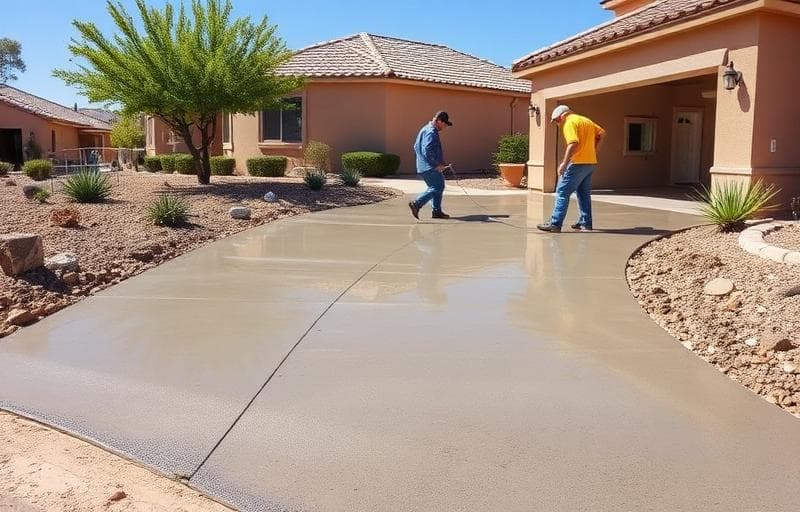
Concrete is the backbone of Arizona residential construction. Whether you need a new driveway, patio, walkway, or pool deck, understanding your options helps you make smarter decisions and avoid costly mistakes.
At ProWorx Restoration, we handle concrete pouring projects of all sizes across Mesa and the Phoenix Metro area. Here's what you need to know before starting your project.
Why Concrete Is the Best Choice for Mesa Homes
Arizona's extreme heat, monsoon rains, and expansive clay soils make material selection critical. Concrete outperforms alternatives like pavers and asphalt in several key areas:
- Heat resistance: Concrete handles 115°F+ temperatures without softening like asphalt
- Durability: Properly installed concrete lasts 25–30 years in the desert climate
- Low maintenance: Annual sealing is all that's needed to keep it looking great
- Versatility: Stamped, stained, and colored options create custom looks
How Much Does a Concrete Driveway Cost in Mesa?
Here's what Mesa homeowners typically spend in 2026:
- Standard broom-finish driveway: $6–$10 per square foot
- Stamped concrete driveway: $12–$18 per square foot
- Colored or stained concrete: $8–$14 per square foot
- Average 2-car driveway (400–600 sq ft): $3,000–$8,000
These prices include demolition of old concrete, grading, forming, pouring, and finishing. Request a free estimate for your specific project.
Concrete Patio Options for Desert Living
A well-built patio extends your living space and adds value to your home. Popular patio styles in Mesa include:
- Stamped concrete: Mimics natural stone, brick, or tile at a fraction of the cost
- Exposed aggregate: Reveals decorative stones for a textured, slip-resistant surface
- Colored concrete: Integral color mixed throughout for fade-resistant results
- Cool deck coating: Specialized surface that stays cooler underfoot — essential for Arizona pool decks
Desert Climate Considerations
Concrete in Mesa faces unique challenges. The extreme temperature swings — from 115°F summer highs to near-freezing winter mornings — cause expansion and contraction that can lead to cracking if not properly addressed.
Key steps we take for every Mesa concrete project:
- Control joints placed at proper intervals to manage cracking
- Proper sub-grade preparation to account for expansive soils
- Fiber mesh or rebar reinforcement for structural integrity
- Curing compounds to prevent rapid moisture loss in dry heat
These details matter. Learn more about building permits in Mesa and what's required for your concrete project.
When to Replace vs. Repair Concrete
Not every crack means you need a full replacement. Here's a general guide:
- Hairline cracks: Cosmetic — seal and monitor
- Cracks wider than ¼ inch: Professional repair recommended
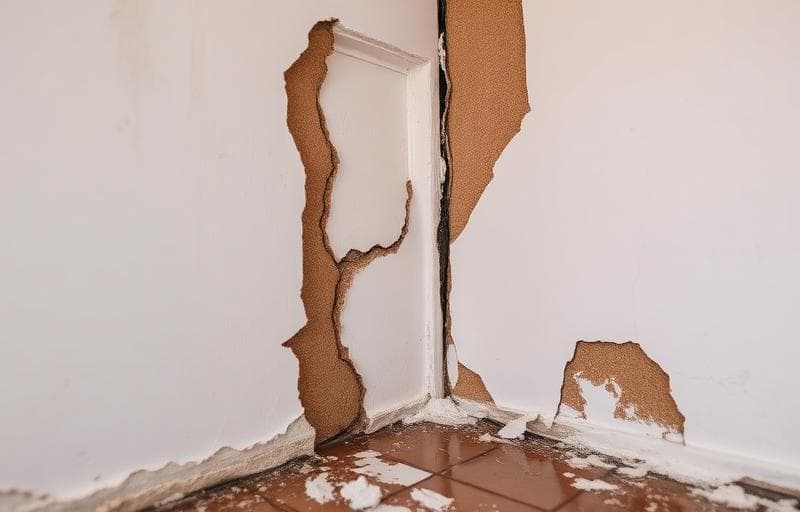
- Heaving or settling: May indicate soil issues — consult a construction professional
- Widespread spalling or crumbling: Full replacement is usually more cost-effective
Ready to Start Your Concrete Project?
Whether it's a new driveway, patio extension, or pool deck, ProWorx Restoration delivers quality concrete work built for Arizona's demanding climate. As a licensed general contractor (ROC #349454), we handle everything from permits to final finishing.
Schedule your free estimate today and let's discuss your project.
Pouring Concrete in Arizona Heat
Hot weather concreting is a genuine technical discipline, not a scheduling inconvenience. High temperatures, low humidity and wind pull water out of fresh concrete quickly, which accelerates setting, reduces ultimate strength and causes surface cracking before the slab has had a chance to cure.
Mitigations include pouring early in the morning, keeping aggregate and mixing water cool, using admixtures that retard set, dampening the subgrade, and protecting the surface from evaporation immediately after finishing. A contractor who treats a July pour the same as a February pour will produce a weaker slab.
Curing Is Not the Same as Drying
Concrete does not dry; it cures through a chemical reaction that needs water to continue. Concrete that loses moisture too quickly stops gaining strength, which is why a slab can look finished and still be considerably weaker than specified.
Keeping the surface moist, applying a curing compound or covering the slab for the first days matters more in Arizona than almost anywhere else. It is also the step most easily skipped, because its absence is invisible until cracking appears later.
What Goes Under the Slab
Most concrete failures start below the concrete. The subgrade must be cleared of organic material, graded and properly compacted, with a suitable base layer where needed. Poorly compacted ground settles unevenly, and the slab cracks to follow it.
This is invisible once the pour is complete, which is exactly why it is worth asking about. A beautifully finished slab on badly prepared ground will fail, and no amount of surface quality compensates.
Control Joints and Honest Expectations
Concrete shrinks as it cures, and some cracking is inevitable. Control joints are deliberately cut grooves that encourage cracks to occur in straight, planned lines rather than randomly across the surface.
Spacing and depth matter: joints cut too shallow or too far apart do not control anything. A contractor who promises crack-free concrete is overselling; one who explains where joints will be placed and why is being straight with you.
Reinforcement and Thickness
Thickness and reinforcement should match the intended use. Walkways and patios carry light loads. Driveways carry vehicles, and RV pads carry considerably more, requiring greater thickness and appropriate reinforcement.
Steel bar, wire mesh or fibre reinforcement does not prevent cracking; it holds cracks tightly together and maintains load capacity across them. Specifying the right combination for the use is more important than adding reinforcement indiscriminately.
Finishes and Surface Temperature
A broom finish gives traction and suits driveways and walkways. Exposed aggregate reveals the stone within and hides staining well. Stamped concrete imitates stone, brick or tile and allows decorative patterns.
In Arizona, colour affects comfort directly. Dark finishes become extremely hot in summer sun, which matters on pool decks and patios where people walk barefoot. Lighter colours stay noticeably cooler and are worth considering wherever bare feet are expected.
Drainage Away From the House
Any new concrete changes how water moves across the property. Patios and walkways must slope away from the house, not toward it, or monsoon runoff is directed straight at the slab edge and foundation.
This is a frequent and expensive mistake. Concrete poured level with or sloping toward the house turns every heavy storm into a water intrusion risk, and correcting it afterwards means removing and repouring.
Sealing and Maintenance
Sealing protects concrete from staining and moisture and enhances decorative finishes, but it is not permanent. Arizona sun and traffic degrade sealers, so reapplication on a cycle is part of ownership.
Keeping expansion joints maintained, cleaning oil stains promptly before they soak in, and addressing small cracks before water enters and widens them all extend the life of a slab considerably.
Repair, Resurface or Replace
Minor surface wear and small cracks can often be repaired or covered with a resurfacing overlay, which is considerably cheaper than replacement and can refresh appearance substantially.
Where a slab has settled unevenly, heaved, or cracked extensively because the ground beneath it failed, resurfacing only hides the problem temporarily. Understanding why the concrete failed determines whether repair will last or whether replacement with proper subgrade preparation is the honest answer.
RV Pads and Side-Yard Slabs
Mesa's larger lots make RV and boat parking common, and those slabs carry far heavier loads than a patio. They need greater thickness, appropriate reinforcement and a properly compacted base, and the approach from the street has to be considered so vehicles are not crossing a thin section to reach a thick one.
HOA rules and city setbacks frequently govern where an RV pad can be placed and whether screening is required, so both should be confirmed before any concrete is ordered.
How Long Before You Can Use It
Concrete can usually take foot traffic within a day or two, but it is not ready for vehicles for considerably longer, and full strength takes weeks. Driving on a driveway too early causes cracking that appears later and is often blamed on the pour rather than on the timing.
Your contractor should tell you specifically when foot traffic, furniture and vehicles are acceptable for your slab and the conditions it was poured in, rather than quoting a general rule.