Our Pre-Loss Restoration Process
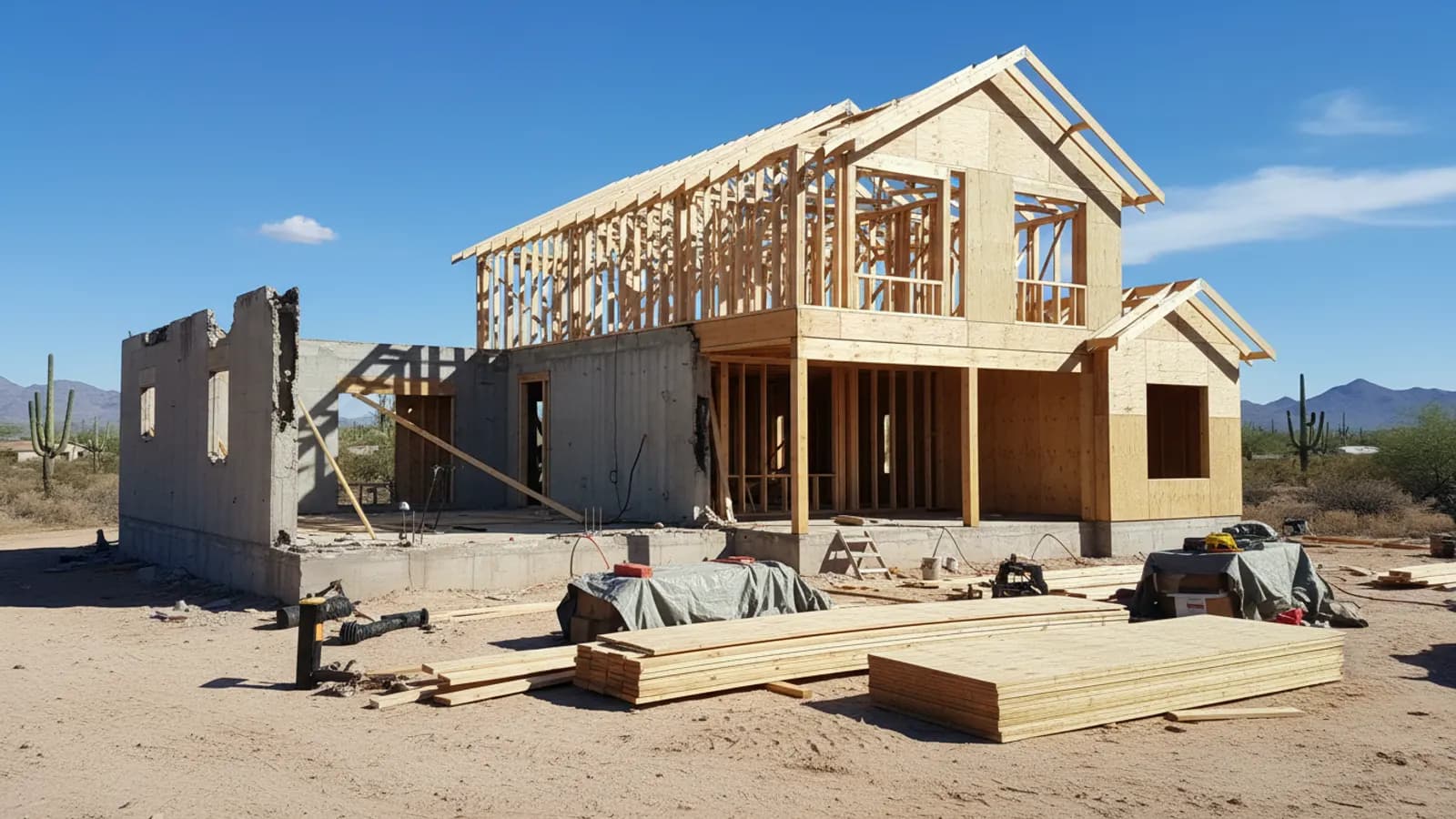
We start by reconstructing the pre-loss condition from your photos, building records, prior remodel paperwork, and on-site inspection. We document every finish, fixture, and material with our adjuster present, then build an Xactimate scope to the line-item level. During the rebuild we match each finish on-site and submit substitutions in writing when an exact match isn't available — keeping your
insurance claim clean.
Common Pre-Loss Restoration Challenges in Arizona
Phoenix-metro homes built in the 1970s–90s often have discontinued tile, cabinet, and fixture lines. Stucco textures vary by builder and era and require hand-matched application. HOA-controlled exteriors (paint colors, roof tile profiles) must match the original spec exactly — which we verify with the HOA before ordering materials.
Materials, Sourcing & Documentation
We work with regional and national suppliers to locate discontinued materials, salvage yards for vintage hardware, and custom millwork shops for cabinet door reproduction. Every substitution is photographed, documented, and signed off by your insurance adjuster — protecting both you and the integrity of your claim.
What "Pre-Loss Condition" Actually Means
Restoring a home to its pre-loss condition means returning it to the state it was in immediately before the fire, using materials of like kind and quality. It does not mean upgrading the home at the insurer's expense, but it also does not mean accepting cheaper substitutes. If your kitchen had solid-wood cabinets and natural stone countertops, the restoration should replace them with comparable materials rather than lower-grade alternatives. Understanding this principle helps homeowners ensure the finished restoration genuinely matches what was there before.
"Like Kind and Quality" in Practice
"Like kind and quality" is the standard most insurance policies use to define replacement materials. Applying it requires accurate information about what existed before the loss, including the type, grade and brand of flooring, cabinetry, countertops, fixtures and finishes. Where exact matches are no longer available, comparable materials must be identified. Disagreements frequently arise over whether a proposed replacement truly matches the original. We document the original materials carefully and recommend comparable replacements so these discussions can be resolved with evidence rather than opinion.
Proving What Was There Before
Establishing the pre-loss condition is easier when there is evidence. Photographs and videos taken before the fire, purchase receipts, design documents, remodelling contracts and even real estate listing photos can all help demonstrate what materials and finishes the home contained. Homeowners who keep a simple photographic inventory of their home are in a much stronger position after a loss. Where records are limited, a careful examination of remaining materials and comparable areas of the home can also provide evidence.
Matching Finishes Across Rooms
Restoration becomes more complex when damaged materials are part of a continuous finish that extends into undamaged areas. Flooring that runs throughout several rooms, cabinetry that matches across a kitchen, or paint and texture that continue along a hallway can all make partial replacement difficult. If new materials cannot match the existing ones closely, the result may look inconsistent. Policies and adjusters handle matching issues differently, so documenting the continuity of materials is important when establishing the scope.
Depreciation and Replacement Cost
Some policies pay the actual cash value of damaged items initially, which accounts for depreciation, and then pay the remaining replacement cost once repairs or replacement are completed. Others may pay only actual cash value. Understanding which applies to your policy affects how funds are released during restoration. Keeping receipts and documentation of completed work is often necessary to recover any withheld depreciation.
Custom and Discontinued Materials
Older homes and custom-built homes may contain materials that are no longer manufactured, such as specific tile patterns, millwork profiles or flooring products. Sourcing matching or comparable replacements can require research, custom fabrication or specialist suppliers. Identifying these materials early helps prevent delays later in the project. We locate suitable replacements and document comparability so the restoration reflects the original character of the home.
Quality Control Before Final Walkthrough
A pre-loss restoration is only successful if the finished home genuinely meets the original standard. Before the final walkthrough, we inspect finishes, alignment, colour matching, functionality and workmanship throughout the restored areas. Any issues are corrected before the homeowner is asked to sign off. That final review is an important part of delivering a restoration that feels complete rather than merely repaired.
Contents Inventory and Valuation
Restoring a home to its pre-loss condition includes the belongings inside it, and documenting contents is often one of the most time-consuming parts of a fire claim. Each damaged item typically needs a description, its age, its original cost or replacement cost and, where possible, a receipt or photograph. Room-by-room inventories, organised clearly, make the process far more manageable and help ensure nothing is overlooked. Items that can be cleaned and restored should be separated from those that need replacement. We help organise contents documentation and, for items that can be restored, arrange professional cleaning so they can be returned to the home.
When the Adjuster's Scope Falls Short
Sometimes the initial insurance scope does not include everything required to return the home to its pre-loss condition. Hidden damage discovered during demolition, materials that cannot be matched, code requirements and overlooked areas of smoke damage are common reasons. When that happens, supplements supported by photographs, measurements and documentation can be submitted for review. We identify and document additional items as they arise, so the restoration is not limited by an incomplete initial estimate and the finished home genuinely reflects what was there before the fire.
Keeping a Home Inventory Before Anything Happens
The best time to document your home's condition is before a loss ever occurs. A walk-through video of every room, opening closets and cabinets, combined with photographs of major purchases and their receipts, creates a record that can save weeks of effort after a fire. Store it somewhere other than the house itself, such as cloud storage.