Our Fire Cleanup & Repair Process
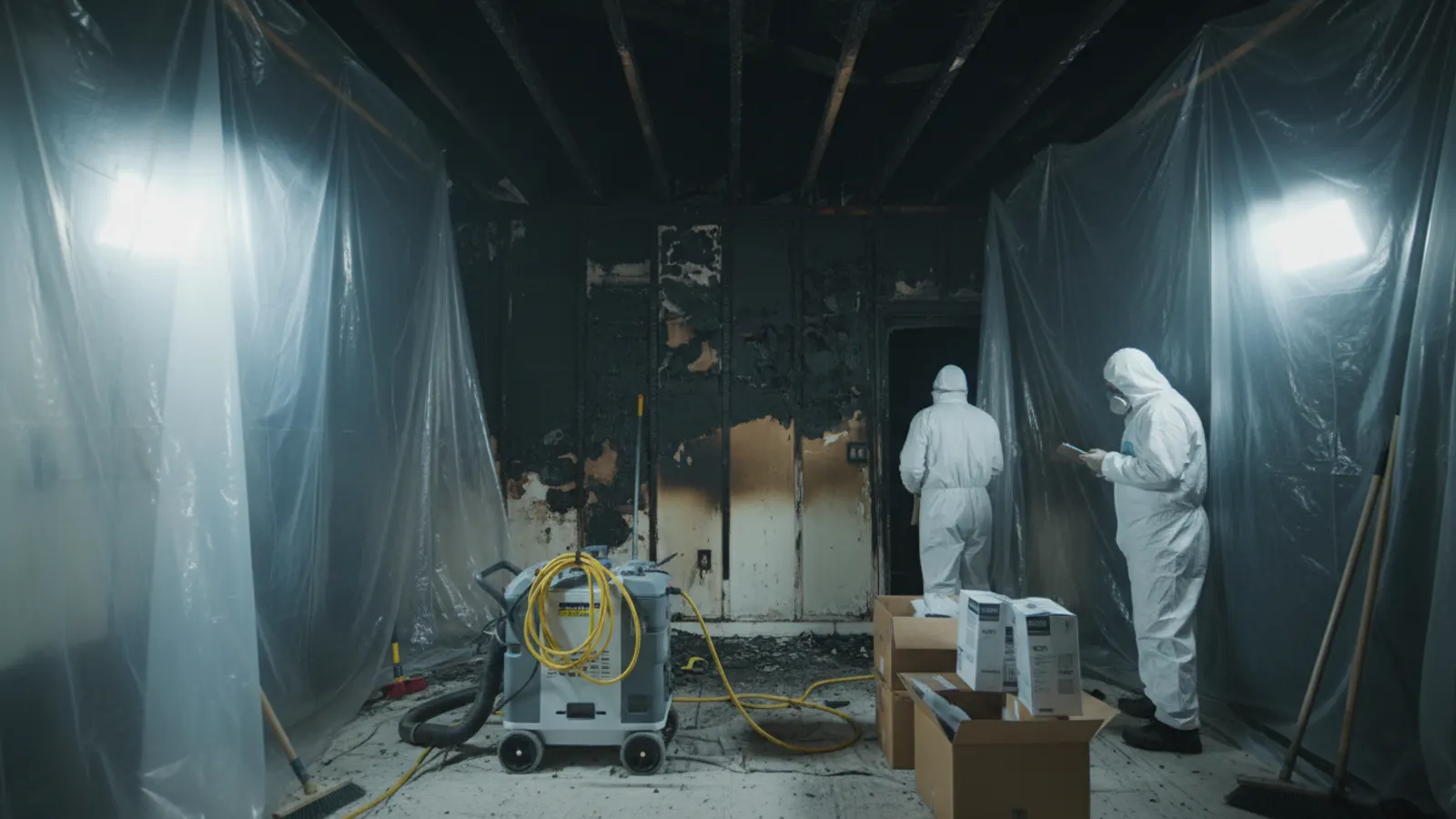
Every job follows a proven sequence: (1) emergency board-up and water extraction from firefighting efforts; (2) damage assessment with photos for your
insurance claim; (3) debris removal and demolition of unsalvageable materials; (4) soot and residue cleaning using the right method for each surface; (5) deodorization with thermal fog or ozone; (6) structural repair, drywall, paint, and finish work. You get one project manager from start to finish.
Why Phoenix Fires Need Specialized Cleanup
Arizona homes have features that change how fire residue behaves: stucco walls that hold odor for months, tile roofs that trap heat above attic insulation, foam-in-place insulation that releases acrid smoke, and HVAC systems running 18+ hours a day during summer that spread soot building-wide. We address each of these conditions specifically rather than applying generic cleanup methods.
Materials & Cleaning Standards
We use IICRC-recommended products: dry chemical sponges for dry soot on porous surfaces, alkaline cleaners for protein fires (kitchen grease), solvent-based cleaners for synthetic soot, and hydroxyl or ozone generators for odor neutralization. All work is documented for your insurance file, and structural repairs meet current building code through the proper city jurisdiction.
Why You Should Never Wipe Soot
One of the most common mistakes after a fire is trying to wipe soot away with a wet cloth or household cleaner. Many types of soot smear when wet, pushing the residue deeper into porous surfaces such as painted drywall, ceiling texture and unfinished wood, which can make staining permanent. Effective soot removal usually begins with dry methods, such as specialised dry-cleaning sponges and vacuuming with HEPA-filtered equipment, before any wet cleaning is attempted. If you are unsure, leave the surface alone until it can be assessed properly.
Dry Sponges, HEPA Vacuums and Wet Cleaning
Professional soot removal uses a sequence of techniques chosen for each surface and type of residue. Dry chemical sponges lift loose dry soot from walls and ceilings without spreading it. HEPA vacuums capture fine particles from surfaces and textures without releasing them back into the air. Once loose residue is removed, appropriate cleaning solutions are used on surfaces that can tolerate wet cleaning. Cleaning progresses from the least aggressive method to the most aggressive, so finishes are not damaged unnecessarily.
Cleaning the HVAC System
If the heating and air-conditioning system ran during or after a fire, it almost certainly circulated smoke and soot through the ductwork and into rooms that were otherwise unaffected. Contaminated ducts continue to release odour and particles every time the system runs, undermining cleanup elsewhere. HVAC cleaning involves inspecting and cleaning the ductwork, registers and air handler, replacing filters and, where necessary, treating the system to remove odour. It should be completed as part of the restoration, not left as an afterthought.
Thermal Fogging, Ozone and Hydroxyl Treatment
Several methods are used to neutralise smoke odour after visible residue has been removed. Thermal fogging releases a deodorising agent as a fine fog that penetrates the same small spaces smoke reached. Ozone generators can be effective for strong odours but must only be used in unoccupied spaces, because ozone is harmful to people, pets and plants. Hydroxyl generators break down odour molecules and can generally operate safely while people are present, although they work more slowly. The right choice depends on the severity of the odour and whether the home is occupied.
Sealing Before Repainting
Even after thorough cleaning, some smoke odour and staining can remain locked inside porous materials. Painting directly over them with ordinary paint often allows stains to bleed through and odour to return. A specialised odour-sealing primer, typically shellac-based, creates a barrier that locks in residual odour and prevents stains from reappearing. Applying the correct primer before repainting is an important step toward a lasting result.
What to Remove Instead of Clean
Some materials cannot be restored effectively and must be removed. Insulation exposed to smoke, heavily charred wood, drywall that is burned or saturated with water, carpeting and padding that have absorbed significant smoke or water, and items that have deformed or melted generally need replacement. Removing them, rather than attempting to clean them, prevents lingering odour and ensures repairs are sound. We explain what needs to be removed and why before the work begins.
Protecting Areas That Were Not Affected
During cleanup, it is important to prevent soot and odour from spreading into parts of the home that escaped damage. Containment barriers, sealed doorways and careful control of airflow keep work areas isolated. Clean contents may be moved to protected areas or stored offsite during the work. These precautions reduce the overall scope of cleaning and help restore the home more quickly.
Cleaning Cabinets, Closets and Hidden Spaces
Smoke reaches places that are easy to overlook. The interiors of cabinets and drawers, closets, the space above cabinets, light fixtures, the inside of outlet boxes and the back of appliances all collect residue. Failing to clean these spaces leaves sources of odour that return once the house is closed up again, often after the homeowner has moved back in and assumes the work is finished. Thorough fire cleanup means emptying and cleaning cabinet interiors, cleaning closets and their contents, and addressing every surface where smoke settled, not only the visible walls and ceilings. It is slower work, but it is what separates a cleanup that lasts from one that has to be redone.
Verifying the Result
Cleanup is complete when surfaces are clean and odour is gone, not simply when the crew has finished working. We inspect cleaned areas carefully, check for remaining residue and odour, and address anything that falls short before repairs and repainting begin, so problems are not sealed in.
Windows, Blinds and Light Fixtures
Glass, window tracks, blinds and light fixtures all attract a film of soot that dulls them and holds odour. Blinds and fixtures are often removed for cleaning, while window tracks need detailed attention to remove trapped residue. Light fixtures also need checking for heat damage before they are reconnected.