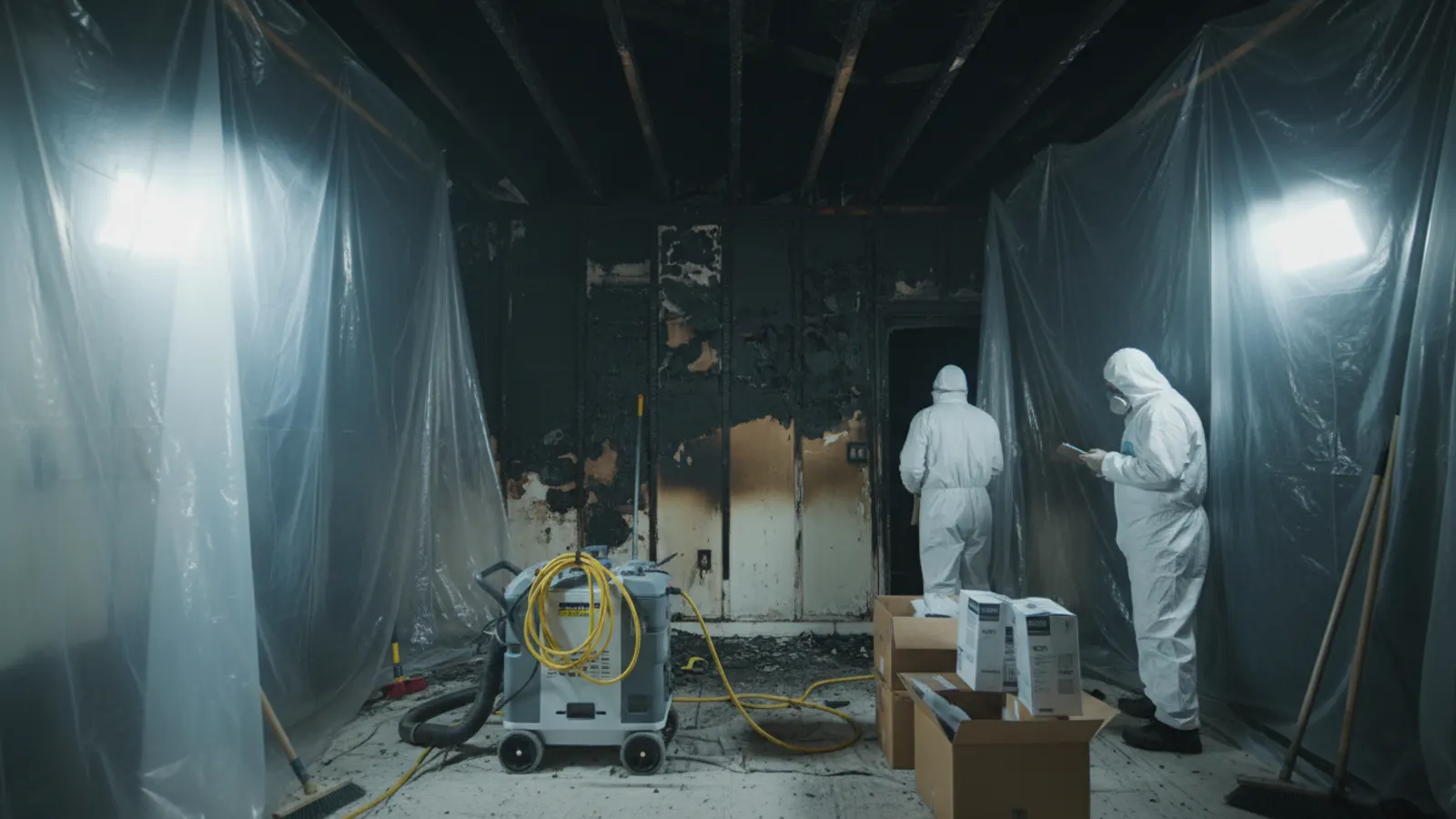
Our Residential Fire Restoration Process
Every job starts with a 24/7 emergency response — typically within 1–2 hours of your call. We secure the property with board-up and tarping, then perform a detailed damage assessment with photos and video for your
insurance claim. From there we extract any firefighting water, remove unsalvageable materials, deodorize, and rebuild. You get a single point of contact and a written timeline before demo begins.
Common Residential Fire Damage Issues in Arizona
Phoenix-metro fires we respond to most often involve kitchen grease fires, electrical fires in older homes (1970s–80s aluminum wiring), and attic fires from HVAC equipment failures during peak summer. Stucco exteriors hold smoke odor for weeks if not properly sealed, and tile roofs frequently need partial replacement after attic fires. We address each of these conditions during restoration — not after.
Materials, Standards & Warranty
We rebuild with materials matched to your original finish (or upgraded with your insurance adjuster's approval): code-compliant drywall, R-30+ attic insulation rated for desert heat, fire-rated framing where required, and concrete tile or shingle roofing matched to HOA standards. All structural work is permitted through Maricopa County or the appropriate city jurisdiction and backed by our workmanship warranty.
Kitchen Fires: The Most Common Home Fire
Cooking is the leading cause of home fires, and kitchen fires leave a recognisable pattern of damage. Grease fires can spread quickly to cabinets and range hoods, and burnt food produces protein residue that coats surfaces throughout the home with an almost invisible film and a strong odour. Cabinet interiors, appliances, walls and ceilings often need cleaning well beyond the area of visible damage. Many kitchen fires are relatively small but still require extensive cleaning to remove residue and odour from the rest of the house.
Deciding What Can Be Saved
After a fire, it can be difficult to know which belongings are worth restoring. Hard surfaces such as glass, ceramics and many metals can often be cleaned successfully. Clothing and textiles can frequently be professionally cleaned to remove smoke odour. Electronics may be recoverable depending on exposure, although soot can damage internal components. Items that were burned, heavily charred or exposed to extreme heat are usually not salvageable. Photographs, documents and keepsakes may be restorable through specialist services. We help assess which items can be restored and which should be documented for replacement.
Clothing, Bedding and Soft Furnishings
Smoke odour penetrates fabrics deeply, and ordinary laundering often fails to remove it. Clothing, bedding, curtains and upholstered furniture may require specialised cleaning methods designed to break down smoke residue and neutralise odour. Washing smoke-damaged clothing in a household machine before it is properly treated can set odours and spread soot to other items. If your belongings were exposed to smoke, keep them separate and let a restoration professional assess them before attempting to clean them yourself.
Where the Family Stays
Depending on the extent of the fire, the home may be unsafe or unpleasant to live in during restoration. Smoke odour, soot residue, damaged utilities and active construction can make staying impractical, particularly for children and anyone with respiratory conditions. Many homeowner policies include additional living expenses that help cover temporary accommodation and related costs while the home is repaired. Check your policy and ask your adjuster early, so arrangements can be made quickly.
Children's Belongings and Sensitive Items
Families with young children should take extra care with items exposed to smoke and soot. Toys, cribs, bedding and items that children may put in their mouths need thorough cleaning, and porous or heavily affected items may be better replaced. Food, medicines and personal care products exposed to heat or smoke should generally be discarded. If there is any doubt about whether an item is safe, it is better to err on the side of caution.
Securing the Home After the Fire
Once the fire department has finished, the property may have broken windows, damaged doors and openings in the roof. Securing the home quickly protects it from weather, theft and further damage, and many insurance policies expect homeowners to take reasonable steps to prevent additional loss. Boarding up openings, tarping the roof and securing entry points are typically the first tasks after an assessment. We provide emergency board-up and tarping so the home is protected while the restoration is planned.
Monsoon Season and an Open Roof
A fire that damages the roof leaves the home exposed to the weather, and in Arizona that becomes especially serious during monsoon season. Heavy rain entering through a fire-damaged roof can cause extensive additional water damage to areas that escaped the fire itself. Proper tarping, secured against strong winds, should be installed as soon as possible after a fire. We check and maintain temporary protection throughout the restoration until permanent roofing is installed.
Smoke Alarms and Reducing Future Risk
Rebuilding after a fire is a natural moment to improve fire safety throughout the home. Working smoke alarms in every bedroom, outside each sleeping area and on every level give the earliest possible warning, and interconnected alarms that all sound together when one detects smoke provide better protection still. A fire extinguisher kept in the kitchen, never leaving cooking unattended, keeping combustibles away from the stove, and having dryer vents cleaned regularly all address the most common household fire causes. We can incorporate improved smoke alarm placement and other safety upgrades into the reconstruction while walls and ceilings are already open, which is far easier than retrofitting them later.
The Emotional Side of a House Fire
A house fire is more than property damage. Losing belongings, being displaced from home and dealing with insurance and contractors all at once is genuinely stressful, particularly for children. Clear communication helps. We explain each phase of the restoration in plain terms, give realistic timelines and keep homeowners informed about progress, so families know what to expect rather than wondering what happens next.