

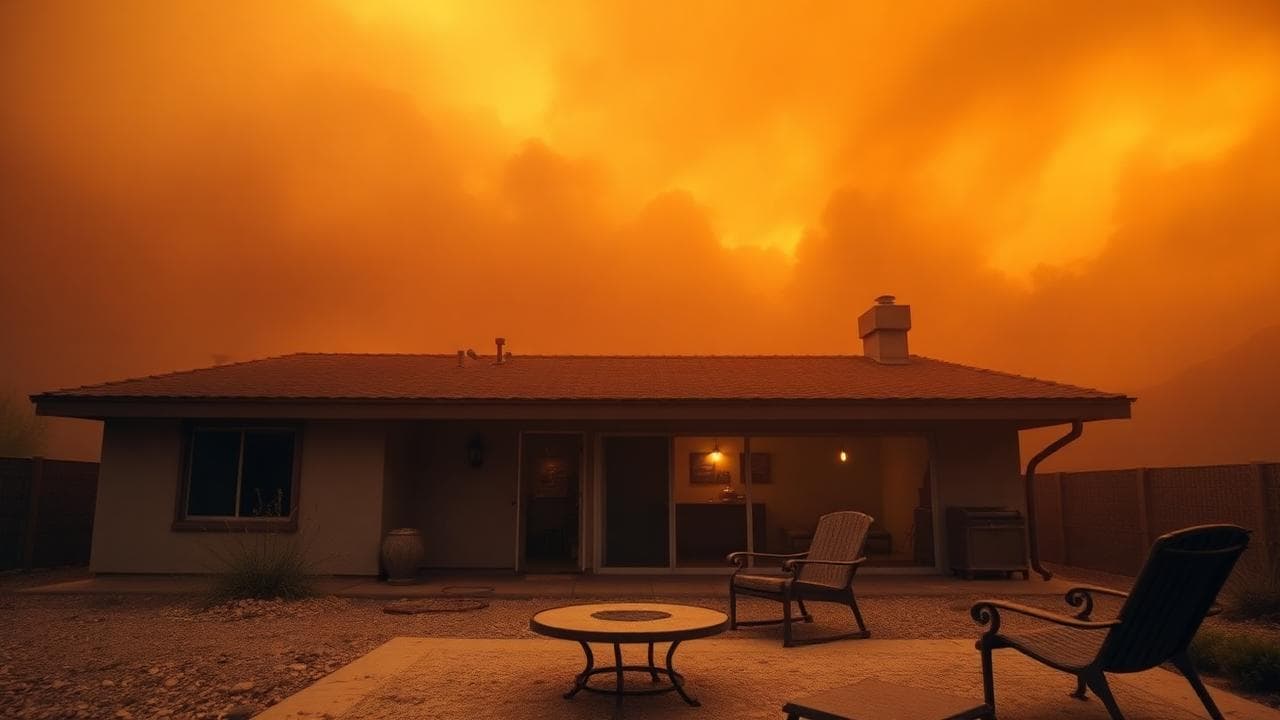
Arizona's wildfire season now runs from late May through September, and the Phoenix metro regularly sits downwind of fires burning in the Tonto, Prescott, and Coconino National Forests. Even when the flames are 40 miles away, smoke intrusion and ash fallout can leave real damage inside homes across Scottsdale, Cave Creek, Fountain Hills, and the northeast Valley. Here's what actually happens and how to handle it.
How Wildfire Smoke Gets Inside Your Home
Modern homes are not airtight. Smoke enters through HVAC intakes, weep holes in stucco, attic vents, dryer vents, and gaps around windows. Ultrafine PM2.5 particles bond to soft surfaces — drywall, upholstery, drapes, HVAC ductwork, and insulation — and off-gas for months. This is why a home that smelled fine right after a fire will smell distinctly smoky when temperatures drop and the HVAC cycles on hard.
Ash Is More Dangerous Than It Looks
- Wildfire ash contains combusted plastics, treated lumber, and heavy metals — not just wood ash
- It's caustic and alkaline; contact with skin causes burns and eye irritation
- Wet ash bonds permanently to painted surfaces, stucco, and pool tile within 48–72 hours
- Dry sweeping aerosolizes it back into the air — always wet-wipe or HEPA vacuum
The First 72 Hours: What To Do
- Change HVAC filters to MERV 13 minimum; consider running the system on "fan only" with windows closed
- Photograph exterior ash coverage before rain arrives — this is your insurance documentation
- Rinse patios, pool decks, and vehicles with a low-pressure hose (do not pressure wash stucco; it drives ash into the substrate)
- Wipe hard interior surfaces with damp microfiber; do not use dry dusters
- Bag and dispose of any food that was exposed to open air
- Call a licensed smoke restoration contractor if odor persists after 5–7 days
What Professional Smoke Restoration Actually Involves
- Air quality testing: PM2.5 and VOC readings to confirm intrusion levels
- HVAC decontamination: Full duct cleaning, coil cleaning, and blower cabinet wipe-down
- Thermal fogging or hydroxyl generators: Neutralizes smoke molecules bonded to porous surfaces
- Content cleaning: Soft goods, drapes, and upholstery cleaned or replaced
- Sealing and priming: Stain-blocking primer on affected drywall before repaint
- Insulation replacement: Attic blown-in insulation often needs full removal in heavy-smoke events
Does Homeowners Insurance Cover Wildfire Smoke Damage?
Yes — in almost all cases, even when your home didn't burn. Standard AZ homeowners policies cover smoke damage under "sudden and accidental" perils. The trap is that adjusters often try to scope only the visible ash cleanup, not the HVAC decontamination or insulation replacement. Document everything, get a licensed restoration estimate before the adjuster arrives, and don't sign a settlement that excludes air quality remediation. Our insurance restoration team works directly with adjusters and can advocate on scope.
2026 Cost Ranges
- Light smoke intrusion (odor, no visible soot): $2,800 – $6,500
- Moderate (HVAC contamination + soft goods): $8,000 – $18,000
- Heavy (visible soot + insulation replacement): $22,000 – $55,000
- Full interior restoration after multi-day event: $60,000+
Prevention for Future Fire Seasons
- Install MERV 13 or HEPA-capable filtration and change filters monthly during fire season
- Seal weep-hole gaps and attic vent gaps with fire-rated caulk
- Keep a portable HEPA air scrubber for the bedroom on heavy-smoke days
- Clear defensible space if you're in Cave Creek, Fountain Hills, or foothill Scottsdale
Not Sure If You Have Smoke Damage?
If your home still smells smoky a week after the air cleared outside, you have residual contamination. ProWorx offers free post-wildfire assessments across the Phoenix metro — we'll test air quality, inspect HVAC, and give you a scoped estimate you can bring to your insurance adjuster. Book an inspection here, or call directly if you're in an active event.
Ash Is Not Ordinary Dust
Wildfire ash is chemically different from household dust. It is alkaline, often caustic enough to irritate skin and eyes, and it can contain combustion residues from whatever burned, which in a wildland-urban interface fire may include structures and vehicles rather than only vegetation. Fine particles penetrate deep into the lungs.
That is why dry sweeping and leaf blowers are the wrong approach. Both re-suspend ash into the air you are breathing and spread it further. Gentle, damp methods and HEPA filtration keep particles contained rather than circulating them through the house.
Protecting Yourself During Cleanup
Before cleaning, protect yourself properly. An N95 or better respirator filters fine particulate; a cloth or surgical mask does not. Gloves, long sleeves, long trousers and eye protection reduce skin and eye contact with alkaline ash. Keep children and pets away from areas being cleaned, since both are closer to the ground where ash settles and less able to avoid contact.
Anyone with asthma, COPD, heart conditions or a weakened immune system should avoid ash cleanup entirely. These are exactly the people most affected by re-suspended particulate.
Cleaning the Exterior First
Work from the outside in, so ash is not tracked back into cleaned interiors. Roofs, gutters, walkways, patios and vehicles collect heavy deposits. Gentle wetting followed by careful washing keeps material from becoming airborne, though water use should be reasonable given Arizona conditions and runoff should be directed away from storm drains where possible.
Outdoor furniture, play equipment, pool surrounds and anything children or pets touch deserve particular attention. Pool filters often need cleaning or replacement after significant ashfall.
Interior Surfaces and HVAC
Indoors, HEPA vacuuming and damp wiping are the core methods. Ordinary household vacuums without HEPA filtration exhaust fine particles straight back into the room. Horizontal surfaces, the tops of door frames, ceiling fan blades, window tracks and the insides of cabinets all collect residue that is easy to overlook.
The HVAC system deserves immediate attention. Replace filters, and consider upgrading to a higher-efficiency filter during and after a smoke event. If the system ran heavily during ashfall, ductwork may hold residue that will recirculate every time the system starts. In heavy exposure, duct cleaning is worth considering.
Soft Goods, Food and Water
Fabrics hold both ash and odour. Curtains, bedding, upholstery and clothing exposed to significant ash should be laundered or professionally cleaned rather than simply shaken out. Washing smoke-exposed items before they have been assessed can set odour into the fibres, so heavily affected items are better handled professionally.
Discard food, medicines and cosmetics that were exposed to ash or smoke, including produce from a garden where ash has settled. If you are on a private well and ash entered the wellhead area, have the water tested before drinking it.
When Smoke Entered the House
Smoke damage can occur without any fire on your property. If smoke entered through windows, doors, vents or the attic, the damage pattern resembles a structure fire at lower intensity: residue on surfaces, odour locked into porous materials, and discolouration of paint, plastics and finishes over time. Soot residues are frequently acidic and continue to etch and stain if left in place.
Many homeowner policies cover smoke damage from a nearby fire even when your home did not burn. Photograph residue, discoloured surfaces and affected belongings, note the dates of the fire and report promptly.
Indoor Air Quality Afterwards
Fine particulate can remain suspended indoors long after visible ash has been cleaned away, and it settles back onto surfaces repeatedly. Portable air cleaners with true HEPA filtration help, particularly in bedrooms, and running the HVAC system's fan with a good filter circulates air through that filter. Ventilating with outdoor air only makes sense once outdoor air quality has genuinely improved, which during a prolonged fire event may take days.
People with asthma or other respiratory conditions often notice symptoms persisting after a house looks clean, which is usually a sign that particulate remains in soft furnishings, ductwork or filters rather than that the cleaning was inadequate.
If ash entered through an open window or a running HVAC system, assume the residue reached further into the house than it appears to have, and clean accordingly rather than only where deposits are visible.