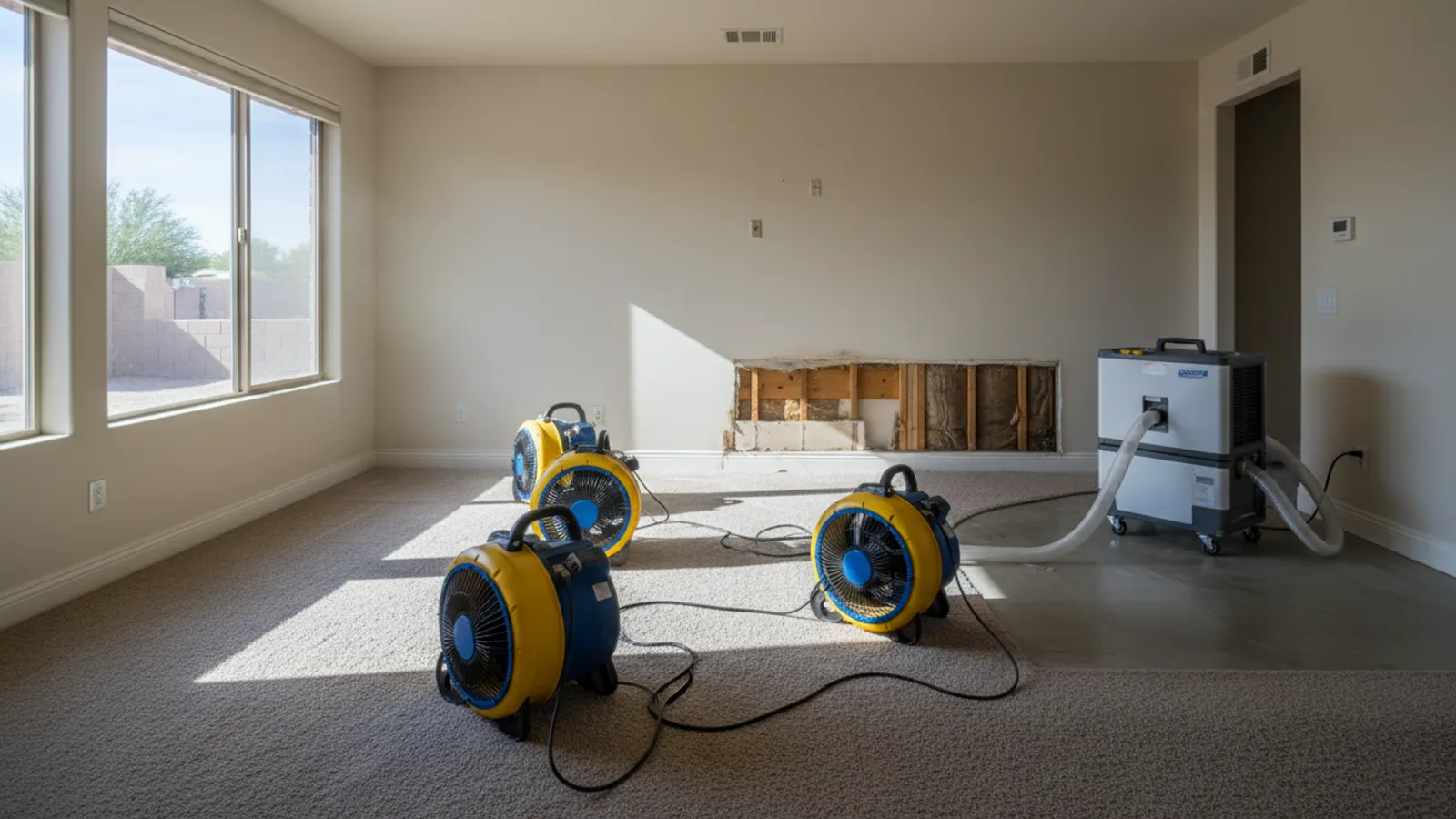
Our Residential Water Restoration Process
Every job follows the IICRC S500 sequence: emergency extraction, moisture mapping with thermal cameras, removal of unsalvageable materials, commercial dehumidification and air movement for 3–5 days, antimicrobial application, then drywall and finish reconstruction. You get one project manager from first call through final paint, and your
insurance claim is documented every step.
Common Residential Water Sources in Arizona
The most frequent calls we get: slab leaks from aging copper supply lines (common in 1970s–80s homes), water-heater bursts in garages, washing-machine supply hose failures, dishwasher and ice-maker line leaks, toilet supply line failures, roof leaks during monsoon, and AC condensate pan overflows in attic-mounted air handlers (a major Phoenix summer issue).
Materials, Equipment & Standards
We use commercial-grade equipment from leading manufacturers — Phoenix Restoration Equipment, Dri-Eaz, and Drieaz — plus EPA-registered antimicrobials and IICRC-certified drying protocols. Reconstruction uses code-compliant drywall, baseboards matched to your originals, and paint colors blended to existing surfaces.
Living in Your Home During Restoration
Many families can remain at home while water damage is being dried, but it depends on what was affected and how. Drying equipment runs continuously and is noisy, it raises the temperature in affected rooms, and those areas may be sealed off. If a kitchen or the only bathroom is out of service, or if Category 3 water or extensive mould is involved, temporarily staying elsewhere is usually more practical and safer. Many homeowner policies include coverage for additional living expenses when a home is uninhabitable, so check your policy or ask your adjuster. We will tell you honestly whether the home is reasonable to live in during each phase of the work.
Protecting Children and Pets
Restoration sites carry hazards that are easy to overlook in a busy household. Drying equipment runs on electrical cords that can be tripped over, removed baseboards expose nails and tack strip, and contaminated water or mould requires keeping people and animals out of affected areas entirely. Dehumidifiers and air movers should not be unplugged or moved, since that interrupts the drying plan. We set up equipment with households in mind, route cords safely and mark areas that must stay closed, but supervision matters. If anyone in the home has asthma, allergies or a weakened immune system, tell us at the start so we can take that into account when planning containment.
What Happens to Your Belongings
Water damage affects contents as well as the structure, and handling them properly is a large part of a residential job. Furniture is moved off wet flooring or raised on blocks to stop wicking and staining. Items that can be cleaned and dried are separated from those that cannot. In larger losses, contents may be packed out, inventoried and taken offsite for cleaning and storage while the house is repaired, then returned once work is finished. Photographs, irreplaceable documents and items of sentimental value should be identified early so they can be prioritised. Keep a list of everything that is damaged or discarded, with photographs, because your insurer will want it.
Where Residential Water Damage Usually Comes From
In Arizona homes, most water damage originates inside the house rather than from weather. Braided supply lines under sinks and toilets fail at their fittings, water heaters in garages and closets rupture as they age, refrigerator ice-maker lines leak slowly behind the appliance, washing machine hoses split, and air-conditioning condensate lines clog and overflow. Many of these failures are preventable with occasional inspection: replacing rubber washing machine hoses with braided ones, checking supply lines for corrosion or bulging, flushing water heaters and replacing them before they fail, and keeping condensate lines clear. A few minutes of checking each year can prevent a very expensive repair.
Your Homeowner Policy and the Claim
Most homeowner policies cover sudden and accidental water damage, such as a burst pipe or a failed water heater, but often exclude damage resulting from long-term leaks, neglect or gradual deterioration, and flood water entering from outside usually requires separate flood coverage. Read the water damage section of your policy, report the loss promptly, document everything, and keep receipts for any emergency expenses. You have the right to choose your own restoration contractor. We provide the detailed documentation adjusters need, including moisture readings, photographs and itemised scope, which helps the claim move forward without unnecessary delay.
Rebuilding After the Drying Is Done
Once the structure is dry, the home has to be put back together, and this is where a single contractor handling both mitigation and reconstruction saves time and confusion. Removed drywall is replaced and finished to match surrounding walls, baseboards and trim are reinstalled, flooring is repaired or replaced, cabinets are reset or rebuilt, and painting blends new work into existing finishes. Matching flooring and texture so repairs are not obvious takes care. We manage the full rebuild after drying, coordinating every trade so your home is returned to the condition it was in before the loss.
Preventing the Next One
Once a home has been through water damage, preventing a repeat becomes a priority. Leak detection devices placed near water heaters, washing machines, under sinks and behind refrigerators can sound an alarm or send a phone alert the moment they sense water, and some systems can shut off the main supply automatically. Knowing where your main shut-off valve is, and making sure everyone in the household knows how to close it, can turn a potential disaster into a minor clean-up. Replacing aging supply lines, washing machine hoses and water heaters on a schedule, rather than waiting for them to fail, is far cheaper than repairing the damage they cause.
Why Homeowners Call Us First
Handling both the drying and the rebuild under one licensed contractor means one point of contact, one schedule and no gap between the crew that dries the house and the crew that repairs it. It also means the people documenting the damage for your claim are the same people who will rebuild it, so nothing gets lost between phases.