


Mesa's retirement community is one of the largest in Arizona, and many homeowners plan to stay in their homes long-term. An accessible bathroom remodel is often the most important aging-in-place investment you can make.
The good news? Modern accessible design doesn't mean institutional-looking bathrooms. Today's aging-in-place features are stylish, functional, and add value to your home.
Why the Bathroom Is the #1 Priority
The bathroom is where most home injuries occur for older adults. Wet surfaces, tight spaces, and the physical demands of bathing create significant fall risks. An accessible remodel addresses these hazards while improving daily comfort.
Essential Accessible Bathroom Features
1. Curbless Walk-In Shower
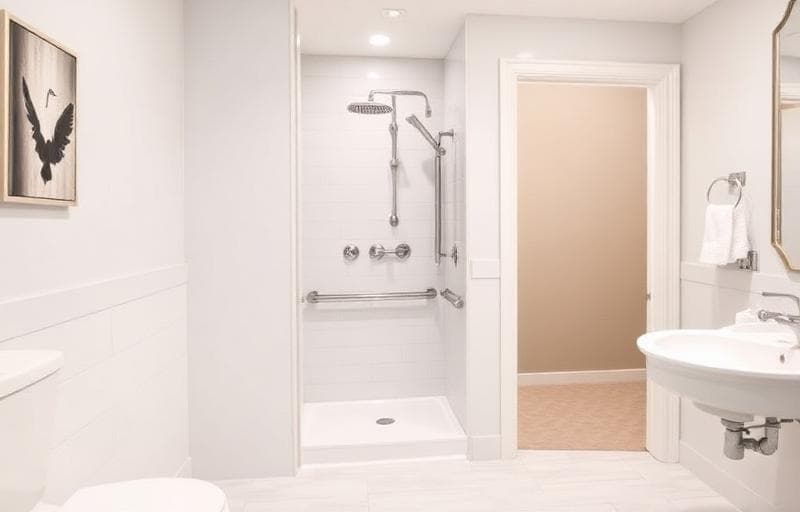
A curbless walk-in shower eliminates the most dangerous transition in the bathroom — stepping over a tub or shower curb. Modern linear drains allow for a completely flat entry. This design is also easier to clean and visually elegant.
2. Grab Bars That Look Like Décor
Today's grab bars come in designer finishes — brushed nickel, matte black, oil-rubbed bronze — and double as towel bars and shelf supports. Placed strategically near the toilet, in the shower, and by the vanity, they provide support without looking clinical.
3. Comfort-Height Toilet
Comfort-height toilets sit 17–19 inches high (vs. standard 15 inches), making sitting and standing significantly easier. Wall-mounted models allow custom height placement.
4. Wider Doorways
Standard bathroom doors are 24–28 inches — too narrow for walkers or wheelchairs. Widening to 32–36 inches accommodates mobility aids. Pocket doors save space and eliminate the need to navigate a swinging door.
5. Non-Slip Flooring
Textured porcelain tile with a high coefficient of friction (COF) rating provides grip without sacrificing style. Matte finishes outperform polished surfaces for slip resistance. See our flooring comparison guide for material options.
6. Handheld Showerhead with Slide Bar
A handheld showerhead on a vertical slide bar allows use from standing or seated positions. This is one of the most affordable and impactful accessibility upgrades.
7. Seated Shower Area
A built-in shower bench or fold-down seat provides a safe bathing option. Teak benches are a popular choice that looks spa-like while providing functional seating.
Cost of an Accessible Bathroom Remodel in Mesa
- Basic accessibility upgrades (grab bars, shower seat, hand-held shower): $2,000–$5,000
- Tub-to-shower conversion with curbless entry: $8,000–$15,000
- Full accessible bathroom remodel (wider door, curbless shower, comfort toilet, new vanity): $15,000–$30,000
These investments often cost less than a single month in an assisted living facility — and they let you stay in the home you love.
Planning Ahead: Universal Design
Even if you don't need accessible features today, consider incorporating "universal design" elements during any bathroom renovation. Installing blocking in walls for future grab bars, choosing curbless showers, and selecting comfort-height fixtures costs very little extra during construction but saves thousands if modifications are needed later.
For more bathroom ideas, explore our small bathroom remodel ideas and custom bathroom design services.
Get a Free Accessible Bathroom Consultation
ProWorx Restoration designs and builds accessible bathrooms that combine safety with modern style. Schedule your free consultation and let's create a bathroom that works for every stage of life.
Why the Bathroom Comes First
Of all the rooms in a house, the bathroom combines the highest risk with the greatest daily necessity. Wet, hard surfaces, tight clearances, and movements that require balance and strength make it the most common location for household falls. It is also the room nobody can avoid using several times a day.
That combination is why accessibility work usually starts here. A bathroom that remains safe and usable is frequently the difference between staying in a home and leaving it.
Curbless Showers Done Properly
A curbless shower allows level entry with no step at all, which suits walkers and wheelchairs and removes the most common tripping point. Achieving it requires recessing or sloping the floor so water drains correctly rather than spilling into the room, and the waterproofing beneath must be continuous and correctly detailed.
A linear drain along one wall or at the entry makes this considerably easier, because the floor can slope in a single direction and larger tiles can be used. Done well, the result reads as a contemporary design choice rather than an adaptation.
Blocking Is the Cheapest Thing You Will Ever Install
Grab bars must be anchored into solid framing or purpose-installed blocking to hold a person's full weight. Fixing into drywall alone is unsafe and gives false confidence precisely when it matters.
Installing plywood blocking inside the walls during a remodel costs very little while the walls are open, and it means bars can be added later exactly where they are needed without reopening anything. Even if you do not want bars now, put the blocking in.
Grab Bars That Do Not Look Institutional
The reluctance most homeowners express about grab bars is aesthetic rather than practical, and modern products have largely answered it. Bars are available in the same finishes as faucets and towel bars, and some double as towel rails or shelves.
Placement matters more than appearance: at the shower entry, beside the seat, and near the toilet, positioned for the way the person actually moves. Thoughtfully specified, they read as fittings rather than equipment.
Seating, Handheld Showers and Controls
A built-in bench or a fold-down seat makes showering safe for anyone who tires easily or has balance concerns, and useful for everyone else. A handheld showerhead on a vertical slide bar can be used seated, adjusted to any height, and makes cleaning the shower easier too.
Controls deserve the same thought. Lever handles are easier than knobs for arthritic hands, and a thermostatic or pressure-balancing valve prevents the sudden temperature changes that cause people to flinch and lose balance.
Toilets, Vanities and Clearances
Comfort-height toilets sit taller than older standard models and make sitting and standing significantly easier. A vanity with knee clearance beneath allows seated use, and a floating vanity keeps the floor clear for a wheelchair or walker.
Doorways and turning space are the constraints people notice last and regret most. Widening a doorway during a remodel is straightforward; discovering afterwards that a walker will not fit through it is not.
Lighting, Flooring and the Details That Prevent Falls
Older eyes need considerably more light to see the same detail, and bathrooms are often the dimmest room in the house. Bright, even lighting with good colour rendering, a wet-rated fixture inside the shower and a low-level night light near the floor all reduce risk.
Flooring should provide traction when wet. Smaller tiles with more grout lines, or textured surfaces specified for slip resistance, are safer than large polished tile. These choices cost nothing extra if made at specification time.
Plan Before You Need It
The most successful accessibility projects are the ones completed before an injury or diagnosis made them urgent. Work done calmly, as part of a planned remodel, costs less and produces a better-looking result than work done quickly under pressure.
Even if you are not ready to build, understanding what your bathroom would require lets you make sensible decisions when other work happens. Installing blocking during an unrelated remodel, for instance, costs almost nothing and preserves the option.
What It Costs and What It Saves
An accessibility-focused bathroom remodel costs broadly what a comparable conventional remodel costs. Curbless shower construction, blocking, lever controls and better lighting add relatively little; the expense sits in the same places as any bathroom project, in tile, fixtures, labour and plumbing changes.
Set against that is the cost of the alternative. Assisted living is expensive and ongoing, and a single fall requiring hospitalisation can cost more than the entire remodel. Framed that way, the work is usually among the better financial decisions a household makes, quite apart from the independence it preserves.