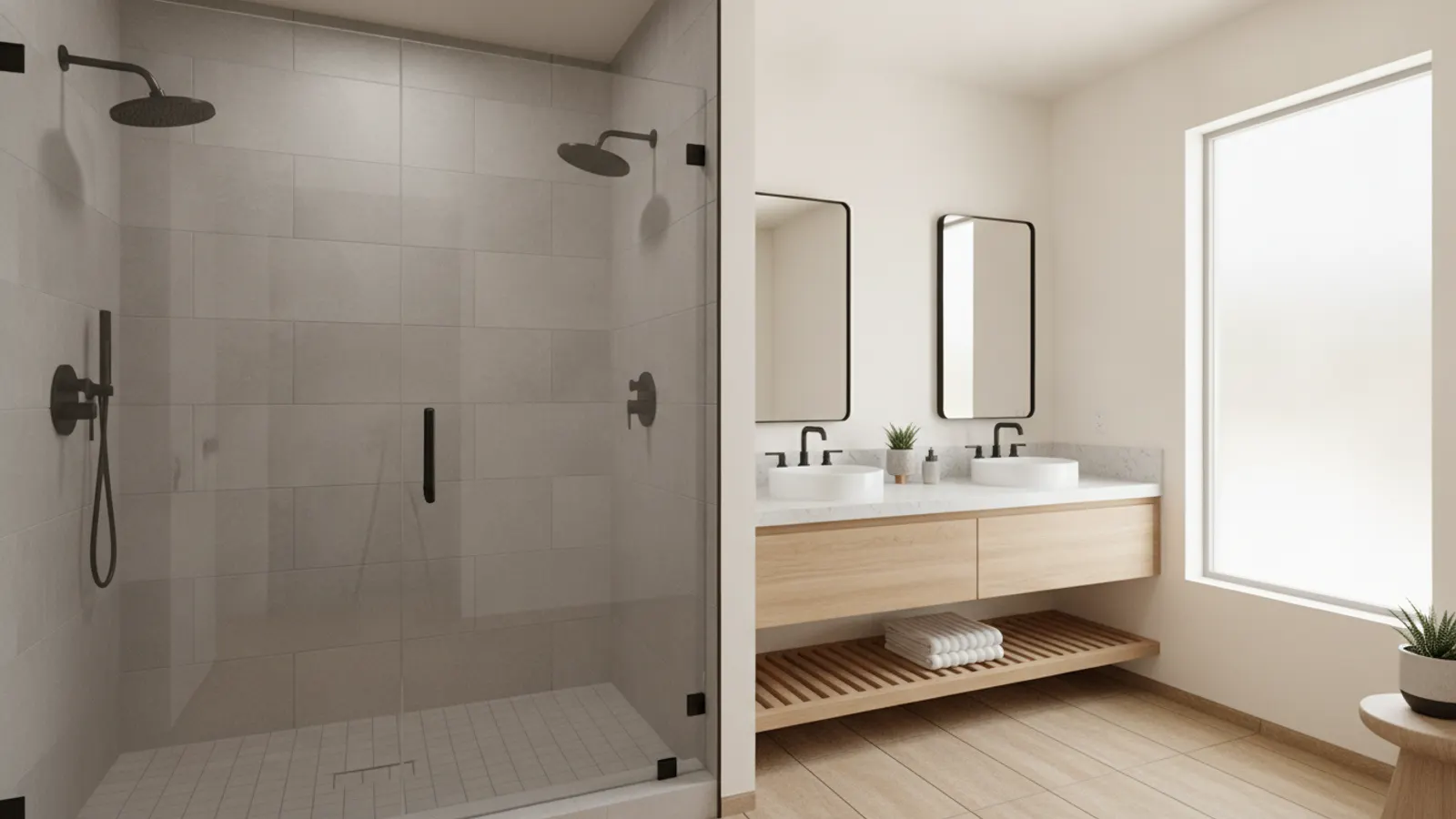
Our Shower Installation Process
We start with a detailed measure and a fixed-scope bid. Framing and blocking go in first (including 2x10 blocking for any future grab bars). Plumbing is rough in PEX with a thermostatic mixing valve, inspected, then closed. Waterproofing membrane is installed and flood-tested for 24 hours per ANSI A118.10. Tile is set with modified thinset and epoxy grout. Glass is measured after tile cures (a 7–10 day fabrication wait), then installed. Total: 3–4 weeks from demo to first shower.
Common Shower Issues in Valley Homes
We routinely retrofit showers built in the 1980s–90s with vinyl pans and cement-board walls that have failed silently for years. Telltale signs: efflorescence on grout lines, soft spots in the floor, musty smell. The fix is a full tear-out to the studs, slab repair if the drain pocket is rotted, and a modern Kerdi or Wedi assembly. We also relocate undersized 1.5" drains to 2" PVC for code compliance and better drainage. See related
bathroom water damage repair.
Materials & Standards We Use
Waterproofing: Schluter Kerdi-Board or Wedi systems with banded seams. Setting materials: Laticrete 254 Platinum or Mapei Kerabond/Keralastic. Grout: Mapei Ultracolor Plus FA (CG2WA) or Laticrete Permacolor Select. Glass: ⅜"–½" tempered low-iron, ClearShield/EnduroShield coated. Valves: Delta MultiChoice, Kohler Rite-Temp, or Moen M-PACT thermostatic. All assemblies meet TCNA Handbook B415 (curbless) or B421/422 (curbed) standards.
Prefabricated, Tiled or Panel Showers
Prefabricated shower units are quick to install and have few seams, making them economical and easy to clean, although design options are limited. Tiled showers offer almost unlimited design flexibility but require careful waterproofing and more installation time. Solid-surface or composite panel systems sit between the two, offering a custom look with fewer grout lines and simpler maintenance. The right choice depends on budget, design goals and maintenance preferences.
Pressure-Balancing and Thermostatic Valves
The shower valve controls water temperature and can affect both comfort and safety. Pressure-balancing valves respond to pressure changes, helping prevent sudden temperature swings when someone flushes a toilet elsewhere in the house. Thermostatic valves maintain a set temperature more precisely and often allow separate control of temperature and flow. Thermostatic valves cost more but provide a more consistent experience.
Rainfall Heads, Handhelds and Body Sprays
Shower fixtures can be configured to suit personal preferences. Rainfall showerheads provide gentle overhead coverage, handheld showerheads on slide bars are useful for rinsing, cleaning and seated bathing, and body sprays offer a spa-like experience. Multiple outlets may require upgraded valves and diverters. Considering water flow and pressure ensures every fixture performs well.
Frameless Versus Semi-Frameless Glass
Frameless glass enclosures use thick tempered glass with minimal metal hardware, creating a clean, modern appearance. Semi-frameless enclosures use thinner glass with some framing, reducing cost while still looking contemporary. Framed enclosures cost the least and suit many installations. Frameless glass requires precise measurement and installation, typically after tile work is complete.
Linear Drains and Centre Drains
Traditional centre drains require the shower floor to slope toward the middle from all directions. Linear drains are long, narrow channels typically placed along one wall or at the entry, allowing the floor to slope in a single direction. This makes it possible to use larger floor tiles and creates a cleaner look, particularly in curbless showers.
Building a Shower Bench
A built-in bench provides a comfortable place to sit, shave legs or rest during a shower. Benches must be properly waterproofed and sloped so water drains off rather than pooling. Floating benches and corner benches can save space. Including a bench during construction is far easier than adding one later.
Steam Showers
A steam shower adds a steam generator that converts the enclosure into a personal steam room. It requires a fully enclosed, vapour-tight space, a sloped ceiling so condensation runs down the walls rather than dripping, special waterproofing and a dedicated electrical supply. Planning these requirements from the start is essential.
How Big Should a Shower Be
Larger showers are more comfortable, but even modest increases in size make a noticeable difference. Space for a bench, room to turn around easily and enough area to stand outside the main spray all improve usability. Shower size should be balanced with the rest of the bathroom so the room remains comfortable overall.
Waterproofing Is Everything
Tile and grout alone are not waterproof. A properly installed waterproofing system beneath the tile protects framing and subfloors from water damage. Membranes must be continuous, properly lapped at seams and correctly detailed at corners, niches, benches and drains. Waterproofing is the most important part of any tiled shower.
Protecting Shower Glass From Hard Water
Arizona's mineral-rich water can etch and cloud shower glass over time. Factory-applied protective glass coatings help water bead and run off, making cleaning easier and reducing mineral buildup. Regular squeegeeing after showering also helps preserve clarity.
Shower Lighting
Showers enclosed by walls or opaque glass can be dim. Wet-location rated recessed lights inside the shower improve visibility and safety. Placing lighting thoughtfully avoids glare while ensuring the space is bright enough for everyday use.
Choosing Shower Tile
Shower tile must withstand constant moisture and cleaning. Porcelain tile is dense and water-resistant, making it a reliable choice for shower walls and floors. Floor tiles should provide traction when wet, which is why smaller mosaic tiles with more grout lines are popular on shower floors. Grout choice affects maintenance, and epoxy grout resists staining and moisture better than standard cement grout, though it is more demanding to install.
Replacing an Existing Shower
Replacing a shower often reveals water damage behind failed tile or a deteriorated pan. Inspecting framing and subfloor once old materials are removed ensures the new shower is built on a sound base.