Our Flooring Installation Process in Arizona
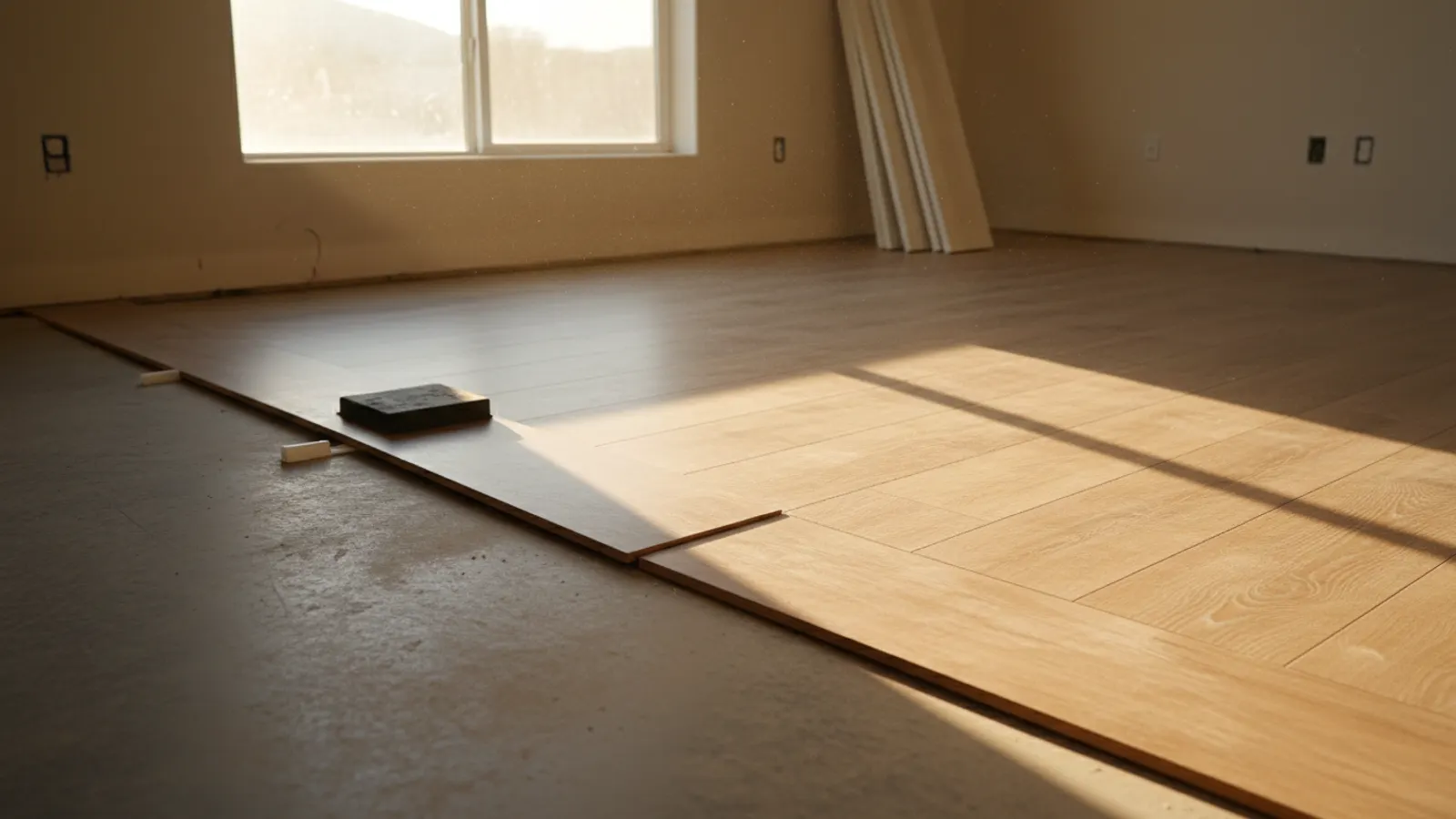
We open with substrate evaluation: slab flatness (1/8" in 10' for tile, 3/16" in 10' for LVP), moisture content (under 4 lbs/1000 sq ft/24 hr for glue-down LVP, under 3 lbs for engineered hardwood), and crack mapping. Demo and dispose of existing flooring. Subfloor patch and self-level where flatness fails. Install crack-isolation membrane under tile, vapor barrier under hardwood and LVP where slab moisture warrants. Acclimate flooring per manufacturer (typically 48–72 hours on site). Install per manufacturer spec — tile with thinset and 1/16" or 1/8" grout joint, LVP with click-lock or glue-down per system, hardwood with floating or glue-down assembly. Single room: 2–3 days. Whole-home: 1–3 weeks.
Common Flooring Issues in Phoenix-Metro Homes
Slab moisture is the most-ignored issue — Arizona slabs without vapor barriers below them continuously transmit moisture vapor, and an unprotected glue-down installation will fail within 1–3 years. Slab cracks telegraph through tile if a crack-isolation membrane is skipped — common on slab-on-grade homes where minor settlement is normal. Hollow-sounding tile from inadequate mortar coverage (less than 80% bond) cracks under load. LVP buckling at room transitions when expansion gaps are skipped. We avoid all four with proper prep and manufacturer-spec installation.
Materials & Standards We Use
Tile installation per ANSI A108 with TCNA-compliant thinset (modified for porcelain). Crack-isolation membranes: Schluter Ditra (ANSI A118.12) for tile over slab. LVP per manufacturer spec — Coretec, Shaw, Mohawk waterproof systems. Engineered hardwood from major manufacturers (Mirage, Mohawk, Shaw) with vapor mitigation when moisture exceeds 3 lbs. Grout: polymer-modified or epoxy as wet-area scope requires. All work warrantied under ROC #349454 plus manufacturer warranty pass-through.
Letting Flooring Acclimate
Some flooring materials, particularly wood and certain vinyl and laminate products, need time to adjust to the temperature and humidity of the home before installation. Installing flooring that has not acclimated can lead to gaps, buckling or other problems once it adjusts to its environment. Following manufacturer guidance on acclimation helps ensure a stable installation.
Preparing the Slab
Most Arizona homes have concrete slab floors, and the condition of the slab determines how well new flooring performs. The slab must be clean, flat and free of excessive moisture. High spots may need grinding and low spots filling, while cracks may need repair. Proper preparation prevents uneven floors, cracked tile and premature failure.
Testing for Moisture
Concrete slabs can transmit moisture from the ground, which can damage moisture-sensitive flooring and adhesives. Testing slab moisture before installation helps determine whether a moisture barrier or a different flooring choice is needed. Skipping this step can lead to warping, mould or adhesive failure.
Choosing Flooring Throughout the Home
Different rooms place different demands on flooring. Bathrooms and laundry rooms need water resistance, bedrooms benefit from comfort and warmth, and living areas need durability and appearance. Many homeowners choose a single material for main living areas to create continuity, with carpet or other materials in bedrooms.
Laminate Versus Luxury Vinyl
Laminate and luxury vinyl both offer wood-look appearances at moderate cost, but they differ in construction. Many luxury vinyl products have waterproof cores, while laminate typically has a wood-based core that can swell if it gets wet. Laminate can offer good scratch resistance, while vinyl tends to be softer and quieter underfoot.
Large-Format Tile
Large-format tiles create a clean, modern look with fewer grout lines, but they require a very flat substrate. Even small variations can cause uneven edges between tiles, known as lippage. Proper slab preparation and installation techniques are essential for a smooth, professional result.
Transitions Between Rooms
Where different flooring types meet, transitions must be planned to accommodate differences in height and allow for expansion. Proper transition strips create safe, attractive connections between rooms and prevent tripping hazards.
Underlayment
Many floating floors require underlayment, which can provide cushioning, sound reduction and moisture protection. Choosing the correct underlayment for the flooring product and subfloor ensures proper performance and may be required to maintain the manufacturer's warranty.
Expansion Gaps
Floating floors and wood flooring expand and contract with temperature and humidity changes. Leaving appropriate gaps around the perimeter, usually concealed beneath baseboards, allows the floor to move without buckling. Arizona's temperature swings make this especially important.
Flooring for Homes With Pets
Pets can scratch floors and cause accidents, so durability and water resistance matter. Scratch-resistant finishes, textured surfaces that hide wear and waterproof flooring options suit households with pets.
Moving Furniture and Baseboards
Flooring installation often requires removing baseboards and moving furniture. Planning for this, and reinstalling or replacing baseboards afterwards, ensures a clean, finished appearance.
Carpet in Bedrooms
Carpet remains popular in bedrooms because it is soft, warm and quiet underfoot. Quality carpet pad improves comfort, insulation and durability, and stain-resistant fibres make maintenance easier. Proper installation, including correct stretching and seaming, prevents wrinkles and premature wear. In Arizona homes, carpet in bedrooms is often paired with tile or vinyl in living areas for practicality.
Hardwood Throughout the Home
Hardwood floors add warmth and value, and they can be refinished several times over their lifetime. In Arizona's dry climate, wood flooring needs attention to acclimation and expansion gaps to prevent gaps and movement. Engineered hardwood offers improved dimensional stability compared with solid wood, making it a popular choice over concrete slabs.
Flooring Warranties
Flooring manufacturers provide warranties that depend on proper installation, including subfloor preparation, moisture testing, acclimation and approved materials. Installing flooring according to manufacturer requirements protects both the floor's performance and the homeowner's warranty coverage.
Choosing Flooring for Arizona Homes
Tile and luxury vinyl are especially popular in Arizona because they stay cool, resist dust and hold up well in active households. Light colours can help rooms feel brighter and cooler, while darker floors show dust more readily. Considering climate, lifestyle and maintenance helps homeowners choose flooring that will perform well for years to come.
How Long Installation Takes
Most flooring projects take a few days, depending on the area, the material chosen and how much slab preparation is needed. Tile requires extra time for mortar and grout to cure before heavy furniture returns.