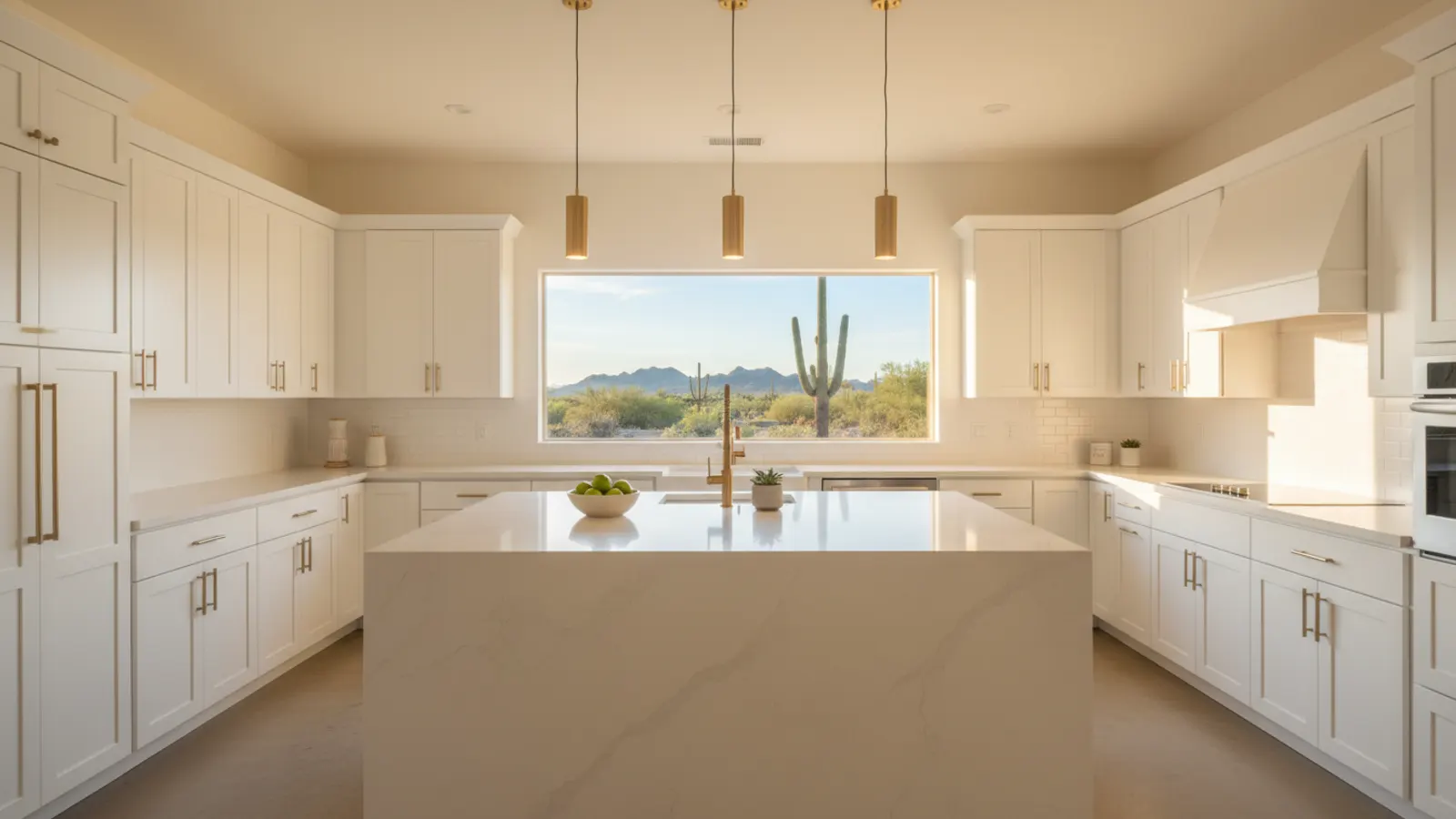
Our Cabinet Installation Process
Step 1: pre-construction site visit to confirm measurements and box condition (reface vs. replace assessment). Step 2: cabinet order — lead time 4–8 weeks for semi-custom, 8–12 weeks for fully custom. Step 3: demo of existing cabinets. Step 4: install — start at the highest point of the floor, set uppers first using a temporary ledger, then lowers, then trim and toe-kicks. Step 5: hardware install and final adjustments. Typical timeline: 2–5 days on site once cabinets arrive.
Reface vs. Replace in Arizona
Cabinet refacing keeps the existing box and replaces doors, drawer fronts, and visible end panels — saves 30–50% vs. full replacement. Refacing works when boxes are plywood, square, and structurally sound. It doesn't work for racked particleboard boxes (very common in early-2000s Buckeye, Surprise, and Maricopa subdivisions) or when you want to change the layout. We assess during pre-construction and tell you which path is honest for your kitchen.
Materials, Hardware & Standards
Box construction: plywood is the long-term standard (holds screws on the second install, resists humidity, lasts 30+ years). Particleboard is acceptable for budget projects but rules out future refacing. Hardware: we install soft-close hinges (Blum, Salice) and full-extension undermount drawer slides standard. Custom features — pull-out trash, spice racks, knife blocks, vertical tray dividers — are specified during design. All electrical and plumbing changes behind cabinets are permitted through the appropriate city jurisdiction.
How Cabinet Boxes Are Built
The quality of a cabinet depends largely on how its box is constructed. Plywood boxes resist moisture and hold screws well, making them a durable choice, while particleboard and medium-density fibreboard are less expensive but more vulnerable to swelling if they become wet, which matters around sinks and dishwashers. Joinery, back panel thickness, shelf material and how drawers are assembled all affect durability. Two cabinets can look identical when installed yet perform very differently after years of daily use, so it is worth understanding what lies behind the door before choosing.
Framed Versus Frameless Cabinets
Framed cabinets have a face frame attached to the front of the box, giving a traditional appearance and added rigidity. Frameless, or European-style, cabinets have no face frame, providing slightly more interior space and easier access, along with a clean, modern look. Each style affects door styles, hinge types and the way cabinets are installed. Neither is inherently better; the choice depends on the look you prefer and how you intend to use the storage.
Stock, Semi-Custom and Custom Cabinets
Stock cabinets come in standard sizes and finishes and are the most economical choice, though they may require filler panels to fit a space. Semi-custom cabinets offer more sizes, finishes and options, allowing a better fit and more personalisation. Fully custom cabinets are built to the exact dimensions and specifications of the kitchen, with complete flexibility in design, materials and finishes, but at higher cost and with longer lead times. The right choice depends on budget, the shape of the kitchen and how much customisation you want.
Hinges and Drawer Slides
Hardware has a large effect on how cabinets feel and how long they last. Soft-close hinges and drawer slides prevent slamming and reduce wear. Full-extension drawer slides allow access to the entire depth of a drawer, and heavy-duty slides are necessary for drawers holding pots, pans or dishes. Quality hardware may cost more initially but improves daily use and longevity considerably. It is one of the most worthwhile places to invest in a cabinet project.
Taking Cabinets to the Ceiling
Extending upper cabinets to the ceiling eliminates the gap above them where dust collects and provides additional storage for items used only occasionally. It also creates a more finished, built-in appearance and can make ceilings feel taller. If the ceiling is very high, stacked cabinets with glass-front uppers or decorative trim can provide a balanced look. Planning cabinet height at the design stage ensures the result looks intentional.
Cabinets in Arizona's Dry Climate
Arizona's low humidity affects wood cabinetry. Solid wood naturally expands and contracts with changes in moisture, and in very dry conditions doors and panels can shrink slightly, revealing unfinished edges or creating small gaps. Cabinet construction that accounts for wood movement, and finishes applied to all surfaces, help minimise these effects. Allowing cabinets to acclimatise to the home before installation is also good practice.
Installation Sequence and Protection
Cabinets are installed after rough plumbing and electrical work is complete and walls have been finished, and before countertops are templated. Upper cabinets are often installed first, so lower cabinets do not get in the way, followed by base cabinets and filler panels. Once installed, cabinets are protected from damage while other trades complete their work. Careful sequencing protects the finished cabinetry and ensures accurate countertop measurements.
Why Installation Quality Matters as Much as the Cabinets
Even the best cabinets will look and perform poorly if they are installed badly. Walls and floors are rarely perfectly level or plumb, so cabinets must be shimmed, levelled and aligned carefully so doors and drawers line up and countertops sit flat. Cabinets need to be secured firmly to wall framing, not just to drywall, because loaded upper cabinets are heavy. Gaps against uneven walls are closed by scribing filler panels to the wall's exact profile. Careful installation is what makes cabinets look custom-fitted rather than simply placed in the room.
Refacing Versus Replacing Revisited
If your existing cabinet boxes are structurally sound and well laid out, refacing them with new doors, drawer fronts and veneer can refresh the kitchen at lower cost and with less disruption than full replacement. If the boxes are damaged, poorly constructed or the layout no longer works, replacement is usually the better long-term investment. We assess the condition of existing cabinets honestly to help you decide.
Cabinet Hardware and Finishing Touches
Handles and knobs are among the last items installed, but they shape how a kitchen looks and feels to use every day. Choosing hardware that is comfortable to grip, sized for the drawer or door, and finished to suit the faucet and lighting brings the whole kitchen together.