Our Countertop Installation Process
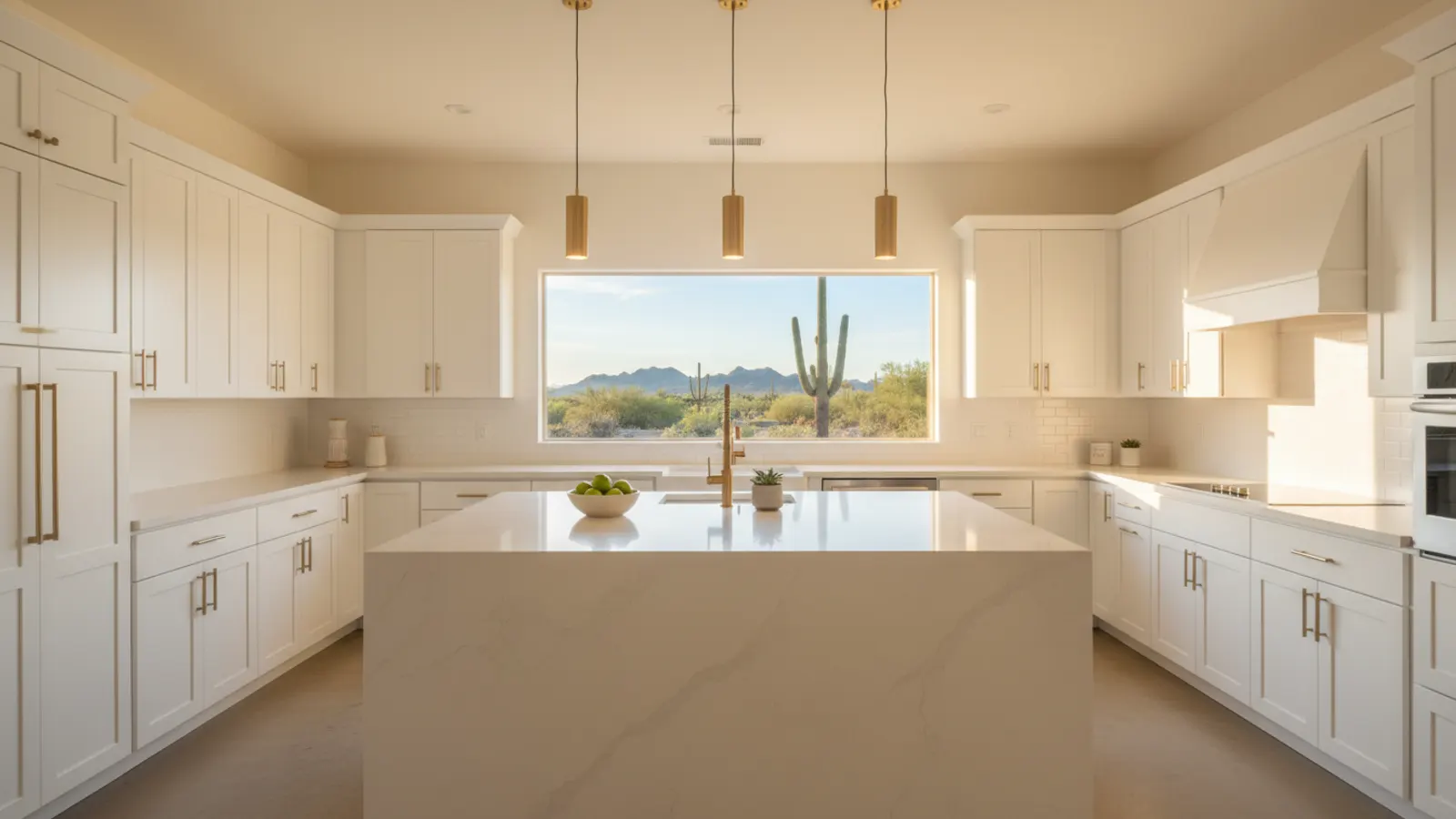
After your kitchen cabinets are set and level, we digital-template the layout (1–2 hours on site). Fabrication takes 7–14 days depending on the slab yard. Installation day: we demo and dispose of the old countertops, dry-fit and shim the new slabs, seal seams with color-matched epoxy, hook up sink and faucet, and silicone caulk all edges. Most kitchens are functional again the same day.
Choosing Countertops for Arizona Kitchens
Quartz dominates Valley remodels because it shrugs off Phoenix hard water with zero sealing. Granite and quartzite still win on patterning and heat tolerance — both are excellent for serious cooks. Marble is beautiful but etches from citrus and tomato, which matters more in a kitchen that actually gets used. Butcher block works well on islands paired with stone perimeter. We talk through trade-offs before you commit.
Materials, Edges & Standards
Slab thickness is typically 3cm (1.25") for quartz, granite, and quartzite; 2cm is available with a built-up edge. Standard edge profiles include eased, bullnose, ogee, and mitered waterfall for islands. We seal all natural-stone installations with a high-quality penetrating sealer rated for 5–10 years. Plumbing and electrical changes are permitted through the appropriate city jurisdiction.
Comparing Countertop Materials
Each countertop material has distinct strengths. Quartz is engineered, non-porous, consistent in appearance and requires little maintenance. Granite is natural stone, highly durable and heat-resistant, with unique patterns but requiring periodic sealing. Quartzite is natural stone that is very hard and resists etching, though it is often more expensive. Solid-surface materials can be repaired and have seamless joints but are more susceptible to heat and scratches. Butcher block brings warmth but requires regular maintenance. Laminate is the most economical choice. Understanding these trade-offs helps you choose a countertop that suits both your kitchen and your habits.
Countertop Thickness and Edges
Countertops are commonly fabricated in two standard thicknesses, and the choice affects both appearance and cost. Thicker material looks more substantial and can span greater distances with less support, while thinner material offers a sleeker look and may cost less. Edges can also be built up to appear thicker. Thickness affects how the countertop relates to cabinets, backsplash and appliances, so it should be chosen as part of the overall design rather than at the last minute.
Where Seams Will Fall
Large countertops often require seams, because slabs come in limited sizes. A skilled fabricator plans seam locations to minimise their visibility and avoid weak points, such as directly over a dishwasher or near a cooktop cut-out. With patterned stone, matching the pattern across the seam is important. Reviewing the seam layout before fabrication lets you understand where joints will appear and request adjustments if necessary.
Overhangs and Support
Countertops that extend beyond the cabinets to create seating need adequate support. Natural stone and quartz can crack if overhangs exceed recommended limits without brackets, corbels or concealed steel supports. The amount of unsupported overhang that is safe depends on the material and its thickness. Planning seating areas and support during design avoids later cracking and provides comfortable knee space for stools.
Templating and Fabrication
Accurate countertops begin with precise templating, which takes place only after base cabinets are installed and secured, and after the sink, faucet and cooktop have been selected. Templates capture the exact dimensions of the cabinets and walls, including any irregularities. The fabricator then cuts and finishes the slab to match. Changing cabinets or appliances after templating can make the countertop unusable, which is why selections must be final at this stage.
Backsplash Coordination
Countertops and backsplashes should be planned together. Some homeowners use the same material as a full-height backsplash for a seamless look, while others choose contrasting tile. The countertop must be installed before the backsplash, and outlets, switches and window trim should be considered so the backsplash finishes cleanly. Coordinating the two ensures a cohesive result.
Living With Your Countertops
Even durable countertops benefit from good habits. Using cutting boards protects both the surface and your knives, trivets prevent heat damage, and wiping up acidic spills such as lemon juice and wine quickly protects natural stone. Following the manufacturer's care recommendations helps maintain appearance and warranties.
Countertops and Heat in Arizona
Heat resistance varies between countertop materials. Natural granite tolerates heat well, while quartz contains resins that can be damaged or discoloured by very hot pans placed directly on the surface. Solid-surface and laminate materials are more vulnerable still. In Arizona, countertops near windows may also receive strong direct sunlight, and some engineered materials can change colour over time with prolonged UV exposure. Using trivets and considering window placement helps protect your investment.
Undermount Sinks and Cutouts
Countertops are fabricated with precise cut-outs for sinks, cooktops and faucets, so these fixtures must be selected before fabrication. Undermount sinks, which attach beneath the countertop, provide a clean look and make wiping crumbs into the sink easy, but they require a solid-surface material with finished cut-out edges. Faucet hole locations must match the chosen faucet. Changing fixtures after the countertop is cut may be impossible without fabricating a new piece.
What Drives Countertop Cost
Countertop prices depend on the material, the grade or rarity of the slab, the total square footage, the number of seams, edge profiles, cut-outs and the complexity of the installation. Exotic natural stones and rare patterns cost considerably more than common colours. Waste is also a factor: an awkward layout may require purchasing additional slab material. Understanding these factors helps you compare estimates accurately and make choices that fit your budget.
Removing the Old Countertops
Removing existing countertops is usually straightforward but can reveal surprises. Old tile may be set in a heavy mortar bed, laminate may be glued firmly to the cabinets and stone removal can damage cabinets beneath if done carelessly. Plumbing must be disconnected and the cabinets inspected to ensure they can support the new material, particularly when moving from lightweight laminate to heavy stone. Addressing these issues before new countertops arrive keeps installation on schedule.