Our Design Process
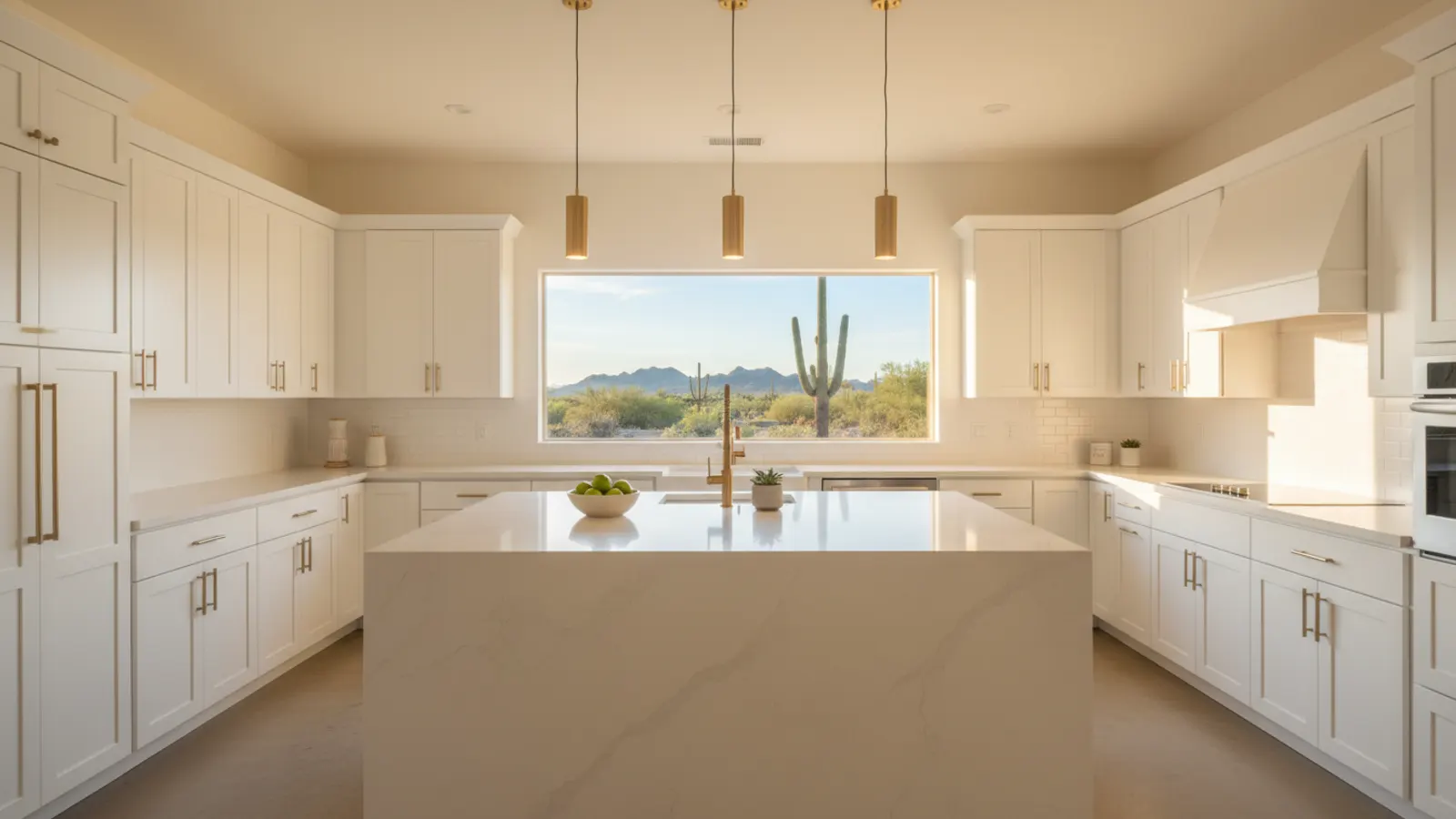
Step 1: discovery and measurement — we document your existing kitchen, your appliance preferences, and how the room is actually used. Step 2: concept and 3D model — typically 2 layout options based on your priorities. Step 3: revisions and material selection — we visit slab yards and showrooms together. Step 4: final drawings, fixed-price contract, and permit submittal. Total design timeline is 2–4 weeks before construction starts.
Designing for Arizona Realities
Our designs account for things national kitchen designers miss: hard-water staining (10–18 grains/gallon Valley water) drives faucet and sink-material choices; desert dust requires tighter cabinet-door tolerances and easier-clean finishes; summer cooking pushes ventilation requirements 25–40% higher than IRC minimums on a 36" range; and slab-on-grade construction limits where plumbing rough-in can move without core-drilling.
Materials, Standards & Permitting
We spec to code first, finish second — Maricopa County electrical, IRC kitchen-ventilation, and accessibility clearances where age-in-place is a priority. Cabinet boxes are plywood (not particleboard) when budget allows. Countertops are quartz or sealed natural stone. All structural and electrical changes are permitted through the appropriate city jurisdiction.
Designing Around How You Actually Cook
A custom kitchen begins with understanding how the household uses the space rather than with cabinet styles or colours. Do you cook elaborate meals or mostly reheat? Does one person cook or several at once? Do you bake regularly, entertain often or need room for children to do homework? Do you prefer appliances on display or hidden away? These answers shape decisions about layout, the placement of appliances, how much counter space is needed and where storage should go. A kitchen designed around real habits works better than one copied from a showroom, however attractive.
Drawers Versus Doors
One of the most significant changes in modern kitchen design is the shift from base cabinets with doors to deep drawers. Drawers let you see and reach everything without kneeling down and rummaging behind other items, making pots, pans and dishes far easier to access. Pull-out pantry units, internal drawers inside tall cabinets and dedicated organisers for utensils, spices and trays make storage more efficient still. Thoughtful storage design can make a kitchen feel considerably larger and more organised without adding any square footage.
Ergonomics and Counter Heights
Standard counter height suits many people, but not everyone. Custom design allows heights to be adjusted for the people who use the kitchen most, or for specific tasks: a lower section for baking and kneading dough, a raised bar for casual dining, or an accessible height for a wheelchair user. Wall ovens and dishwasher drawers placed at comfortable heights reduce bending, and positioning frequently used items between hip and shoulder height reduces strain.
Universal Design for Every Stage of Life
Universal design creates kitchens that remain usable as the people living in them grow older or their needs change. Features include wider walkways, lever-style faucet handles, drawers instead of low cabinets, side-opening ovens, varied counter heights, good task lighting and slip-resistant flooring. When integrated into the overall design, these features look like thoughtful details rather than accessibility equipment. Planning for them during a custom design costs little and can allow homeowners to stay in their homes comfortably for longer.
Kitchens Designed for Entertaining
Households that entertain often benefit from kitchens planned with guests in mind. Islands with seating allow guests to gather while the cook works, separate beverage or coffee stations keep visitors out of the cooking zone, secondary sinks make preparation and clean-up easier, and wide walkways prevent congestion. Placing the refrigerator or a beverage refrigerator at the edge of the work area lets guests help themselves without interrupting cooking. These features help the kitchen work as both a functional workspace and a social centre.
Seeing the Design Before It Is Built
Detailed drawings and three-dimensional renderings help homeowners visualise the finished kitchen before construction begins. They reveal how cabinet layouts, appliance placement, lighting and finishes work together, and they make it much easier to spot problems such as cramped walkways or doors that collide. Making changes on paper is inexpensive compared with changing them once cabinets have been ordered or installed.
Selecting Materials With Samples
Colours and finishes can look very different in a showroom than in your own home. Natural light, the orientation of windows and the colour of surrounding rooms all affect how materials appear. Viewing cabinet door samples, countertop samples, tile and paint together in the actual kitchen, at different times of day, helps ensure the finished space looks as intended. We encourage homeowners to make final selections in the space where the materials will be installed.
Balancing Custom Features and Budget
A custom kitchen does not have to mean an unlimited budget. Investing in custom solutions where they matter most, such as storage, layout and the work surfaces you use every day, while using standard options elsewhere, delivers the benefits of custom design at a more manageable cost. We help homeowners prioritise features that provide the greatest daily value.
Designing for a Small Kitchen
Custom design is often most valuable in small kitchens, where every inch matters. Cabinets built to exact dimensions eliminate wasted filler space, tall pantry units use vertical space efficiently, and integrated appliances keep sightlines clean. Light colours, reflective surfaces and good lighting make a compact room feel larger, while open shelving can reduce visual bulk. A carefully designed small kitchen can be more efficient to cook in than a much larger room with a poorly planned layout, because everything is within easy reach and there is less walking between tasks.
Coordinating Design With Construction
A beautiful design must also be buildable. Plumbing locations, electrical capacity, ventilation routes, structural walls and existing slab conditions all influence what is practical and what will cost more. Involving the contractor during design allows these constraints to be identified early and incorporated into the plan, rather than discovered during construction when changes are more disruptive and expensive. Design and construction working together produces a kitchen that is both attractive and practical to build within the budget.