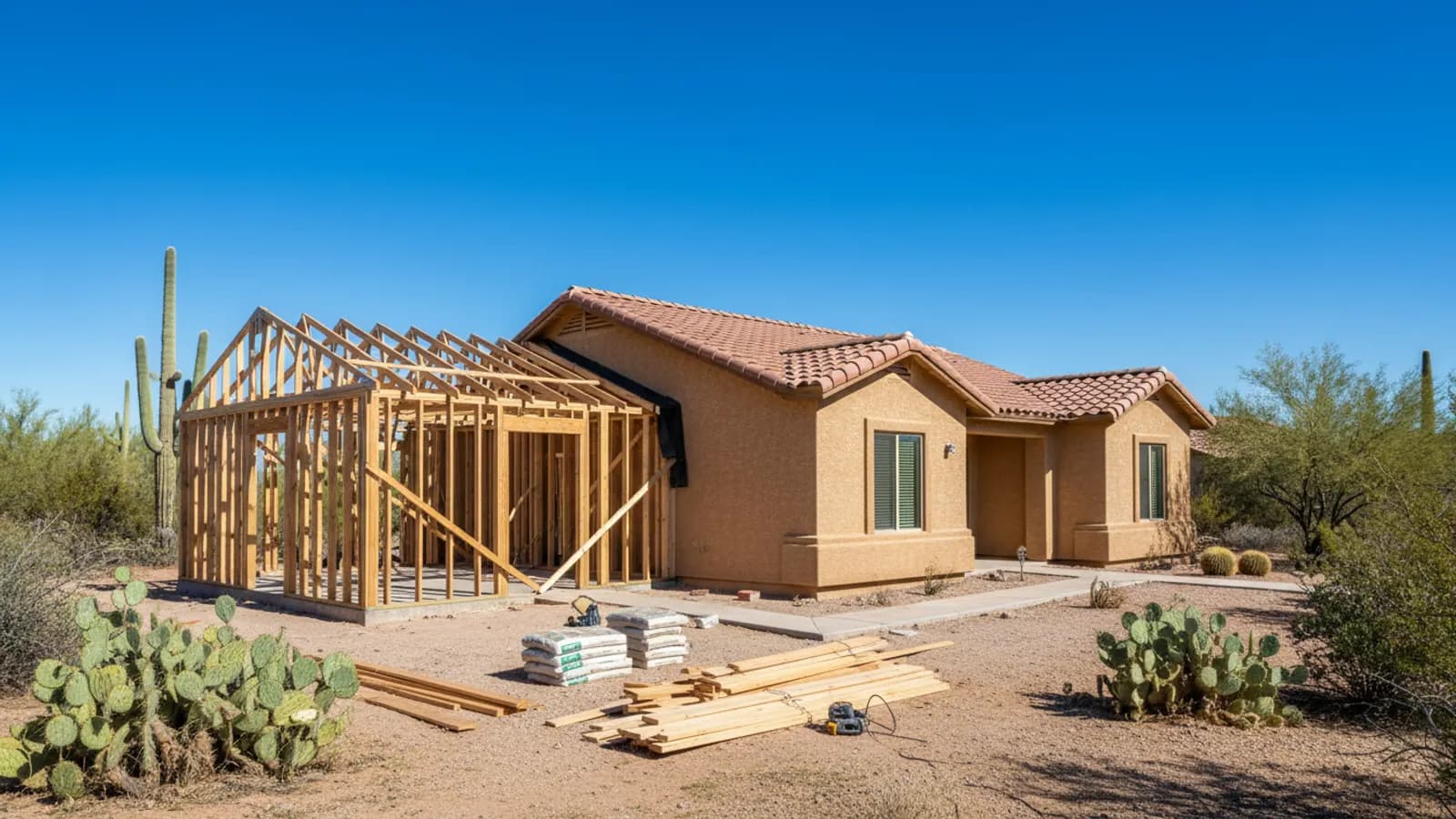
Our Home Addition Process in Arizona
Every addition starts with a feasibility review — lot coverage, setbacks, HOA architectural rules, and existing structural capacity. We then produce stamped drawings, run structural engineering for any second-story or load-bearing modification, and submit to the city alongside the HOA ARC package. Construction sequences footings, framing, dry-in, MEP rough, inspections, drywall, finishes, and exterior tie-in. For most single-story additions in Phoenix, Chandler, or Gilbert, plan on 12–18 weeks on site after permits. Second-story work runs 18–26 weeks. We provide weekly schedule updates and a single project manager from contract through final inspection. See related
residential construction work.
Common Home Addition Issues in Phoenix-Metro Homes
Three constraints dominate Phoenix-metro additions. First, slab-on-grade construction: any new bathroom or kitchen in an addition needs slab cuts or core-drilling for drains, and post-tension slabs require tendon scans before any saw work. Second, HVAC capacity — existing 3- or 4-ton systems often cannot heat and cool added square footage, so we either zone, supplement, or upsize the system. Third, electrical panel capacity. 1990s–2000s tract homes often run 150–200A panels already near capacity; a primary-suite addition with an electric tankless heater, mini-split, or EV-adjacent loads frequently triggers a panel upgrade. We surface all three during the pre-construction walk so they're budgeted, not surprises.
Materials & Standards We Use
We frame to IRC and Arizona-amended IBC with hurricane-rated framing where wind exposure warrants. Stucco matches the existing three-coat assembly with color samples pulled before mobilization. Roof tile is sourced from the original supplier when possible; when discontinued we pull tile from inconspicuous areas (rear-facing slopes) for visible elevations. Windows are dual-pane low-E with U-factor and SHGC meeting the Arizona Energy Code. All work is permitted and inspected, backed by a written workmanship warranty, and performed under ROC #349454. For damage-driven additions, we coordinate scope and pricing with your carrier through our
insurance restoration process.
Opening the Exterior Wall
Connecting an addition to an existing home usually means opening part of an exterior wall. If that wall is load-bearing, temporary supports and a properly sized header or beam are required to carry the load above the new opening. Opening the wall is typically done after the addition is framed and weathertight, so the interior of the home is not exposed to the elements for longer than necessary.
Building the New Foundation
The addition requires its own foundation, designed to match the soil conditions and loads. Where the new foundation meets the existing slab, steel dowels are often drilled into the existing foundation to tie the two together and reduce differential movement. Finished floor heights must align so the transition between old and new floors is level.
Tying the Roof Together
Joining the addition's roof to the existing roof is one of the most critical and leak-prone parts of an addition. The new framing must connect properly to the existing structure, and the roofing, underlayment and flashing must be integrated carefully so water flows away from the junction. Poorly detailed roof tie-ins are a common source of leaks in additions.
Keeping the Home Weathertight
During construction, the existing home must be protected from weather, particularly during Arizona's monsoon season when sudden storms are common. Temporary protection, careful sequencing and prompt completion of the roof and exterior walls keep water out of both the existing home and the new structure.
Electrical Capacity for New Space
An addition requires new circuits for lighting, outlets and possibly heating, cooling or appliances. The existing electrical panel may not have enough capacity or space for additional circuits, in which case a panel upgrade or subpanel may be needed. Evaluating electrical capacity before construction prevents delays.
Extending Plumbing
If the addition includes a bathroom, kitchen or laundry, plumbing must be extended from the existing system. In slab homes, new drain lines often require trenching and must connect to existing drains with proper slope and venting. Water heater capacity may also need to be evaluated.
Inspections During the Build
Additions are inspected at several stages, including foundation, framing, rough plumbing, electrical and mechanical, insulation and final completion. Each inspection must be passed before work proceeds to the next stage. Scheduling inspections promptly keeps construction moving.
Matching Stucco and Exterior Finishes
Making new stucco match the existing stucco requires attention to texture and colour. Because stucco weathers over time, achieving an exact colour match can be difficult, and repainting or recoating adjoining walls may produce the most consistent appearance. Matching trim, roofing and other exterior details completes the seamless look.
Living at Home During Construction
Many families remain in their homes while an addition is built, since most work occurs outside the existing living space until the final connection is made. Noise, dust and workers on site are unavoidable, but careful planning keeps disruption to a minimum. The most disruptive phase is usually when the existing wall is opened.
How Long Addition Construction Takes
Construction time depends on the size and complexity of the addition, site conditions, weather, inspections and material availability. A modest room addition may take a few months, while larger or second-storey additions take longer. A detailed schedule helps homeowners plan.
Blending Interior Finishes
Inside, the transition between the existing home and the addition should be seamless. Matching flooring, trim, doors and wall textures, and aligning ceiling heights where possible, creates continuity. Where an exact match is not available, replacing flooring in the adjoining room can create a consistent look.