


With over 300 days of sunshine per year, Arizona homeowners have a massive opportunity to extend their living space outdoors. The key is designing spaces that are usable year-round.
At ProWorx Restoration, we help Mesa homeowners create functional, beautiful outdoor living areas. Here's what's trending in Arizona backyard design.
Why Outdoor Living Adds Serious Value in Arizona
In the Phoenix Metro area, outdoor living space additions can increase home value by 10–15%. Buyers expect usable outdoor areas in Arizona — it's practically a requirement, not a luxury.
Covered Patios and Pergolas
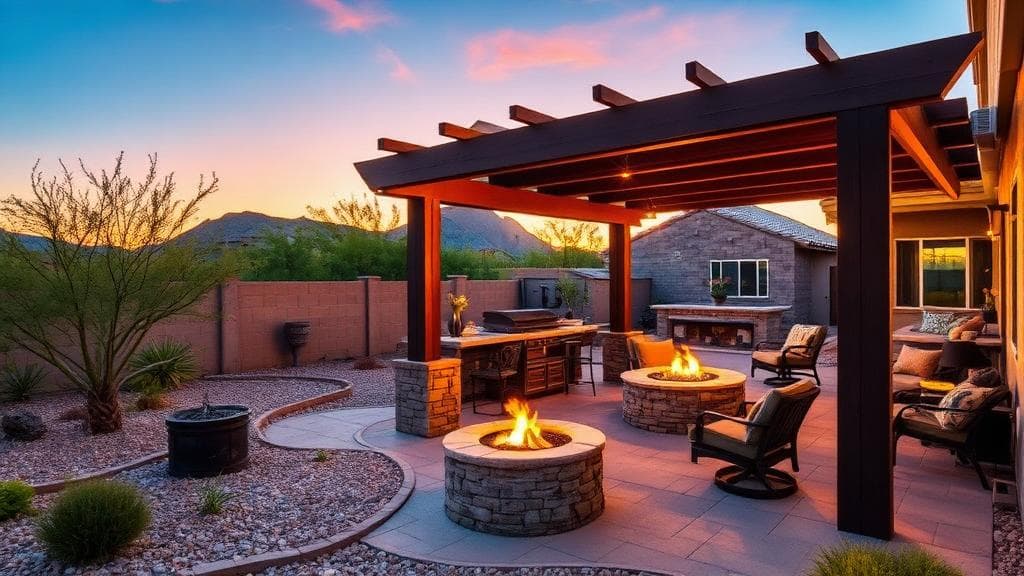
Shade is non-negotiable in Arizona. A covered patio or pergola transforms an unusable sun-baked slab into a comfortable outdoor room.
- Alumawood covers: Low-maintenance, affordable, 15+ year lifespan
- Wood pergolas: Beautiful aesthetics, customizable, require periodic sealing
- Solid roof extensions: Maximum shade, can support fans and lighting
A quality concrete patio provides the foundation for any covered structure.
Outdoor Kitchens — Arizona's Favorite Upgrade
Outdoor kitchens are the #1 requested backyard feature in Mesa. A basic setup starts around $5,000–$10,000, while full outdoor kitchens can reach $30,000+.
Pair your outdoor kitchen with a modern indoor kitchen for seamless indoor-outdoor entertaining.
Fire Features for Year-Round Use
Arizona evenings cool down significantly, especially November through March. Fire pits and fireplaces extend your outdoor living season and create a natural gathering point.
Desert Landscaping Integration
The best outdoor living spaces blend hardscape with desert-friendly landscaping. Low-water plants like agave, bougainvillea, and desert sage add color without high water bills.
Shade Sails and Misting Systems
For budget-friendly heat reduction, shade sails and misting systems make a huge difference. A professional misting system can drop ambient temperatures by 20–30°F.
Planning Your Outdoor Transformation
Start with a free consultation from ProWorx Restoration. We handle everything from concrete work to electrical and finishing touches.
Contact us today to start designing your dream backyard.
Shade Is the Whole Design Problem
In Arizona, an outdoor space without shade is unusable for half the year, which makes shade the first design decision rather than a later addition. Covered patios attached to the house provide the most protection and can integrate with the roofline. Freestanding ramadas allow placement anywhere in the yard.
Pergolas offer partial shade and visual structure, and shade sails are the most economical option though they need proper anchoring. Whatever the structure, orientation matters: afternoon shade is worth considerably more than morning shade here.
Building for Monsoon Wind
Any shade structure in Arizona must be engineered and anchored for monsoon wind loads, not merely for appearance. Patio covers, pergolas and especially shade sails present large surfaces to gusting wind, and inadequately anchored structures become projectiles that damage the house as well as themselves.
Permits are frequently required for permanent structures, and HOA approval is usually needed for anything visible. Both are worth confirming before purchase, since an attractive structure that cannot be approved is wasted money.
Choosing Surfaces You Can Walk On
Surface temperature determines whether an outdoor space gets used barefoot. Light-coloured concrete, pavers and natural stone run considerably cooler than dark surfaces, and texture helps as well.
Artificial turf has become popular for its appearance and water saving, but it is worth knowing that it gets very hot in direct sun, considerably hotter than natural grass. Placing it where it receives afternoon shade, or accepting that it will be a visual rather than a barefoot surface, avoids disappointment.
Outdoor Kitchens That Survive
An outdoor kitchen in Arizona needs materials chosen for the conditions. Cabinetry must be exterior-rated: indoor units repurposed outdoors fail quickly. Stainless steel grades differ in corrosion resistance, and countertop materials vary in how they handle sustained ultraviolet exposure, with natural stone generally outperforming engineered quartz outdoors.
Plan utilities early. Gas, water, drainage and dedicated circuits all need routing, and retrofitting them after hardscape is laid means cutting it up again.
Pools and the Deck Around Them
A pool is only as usable as the deck around it. Surface temperature, slip resistance when wet, and drainage that carries water away from both the pool and the house all matter more than the pool finish for day-to-day enjoyment.
Shade adjacent to the pool extends how long it is comfortable to sit outside. So does planning for where furniture will go, which is easier to get right before hardscape is poured than afterwards.
Misting, Fans and Heat Management
Evaporative misting systems work genuinely well in Arizona's low humidity, lowering perceived temperature noticeably under a covered area. High-pressure systems produce a finer mist that evaporates before wetting furniture.
Outdoor ceiling fans rated for damp or wet locations move air and make covered patios usable on warm evenings, and they help keep insects away. Both are far easier to install during construction, when wiring and plumbing can be concealed.
Fire Features for the Cooler Months
Arizona evenings from autumn through spring are genuinely pleasant, and fire features extend outdoor use across those months. Gas fire pits and fireplaces offer convenience and control; wood-burning offers atmosphere but produces smoke and ash and may face local restrictions.
Placement needs thought regarding clearances from structures and overhead shade, and gas features need a line run, which again is easier before hardscape is complete.
Landscaping That Works With the Climate
Desert-adapted landscaping reduces water use and maintenance while looking intentional when designed properly. Defined planting beds with edging, specimen plants such as agave, ocotillo or desert trees, and varied gravel sizes create structure that a flat expanse of gravel does not.
Trees deserve particular attention, since shade from a well-placed tree reduces cooling load on the house as well as making the yard usable. Choose species suited to monsoon wind, as shallow-rooted varieties come down regularly.
Drainage Is Not Optional
Every hardscape decision changes how water moves across the property during monsoon storms. Patios, decks and walkways must slope away from the house, and large paved areas concentrate runoff that previously spread across soil.
Getting this wrong directs storm water against the foundation, which is expensive to correct afterwards because it means removing and repouring. Planning drainage alongside the layout, rather than after it, is what separates an outdoor space that lasts from one that causes problems.
Lighting an Outdoor Space
Because Arizona evenings are when outdoor spaces are most usable for much of the year, lighting determines how much value you get from them. Layered lighting works outdoors as it does inside: ambient light under a covered patio, task lighting over cooking and dining surfaces, and accent lighting on trees, walls or architectural features.
Warm colour temperatures flatter desert materials and plants better than cool white. Shielded fixtures directing light downward reduce glare and are required in some communities, particularly in dark sky areas. Running wiring during construction is straightforward; retrofitting it through finished hardscape is not.
Privacy and Defining the Space
Arizona lots frequently place neighbours close, and outdoor spaces work better when they feel enclosed. Block walls, strategically placed planting, lattice panels, outdoor curtains and changes in level all define a space and increase the sense of privacy.
HOA rules often govern wall heights and what can be attached to them, so confirm before building. Mature planting takes time, which is an argument for starting it early even if the hardscape comes later.
Phasing an Outdoor Project
Outdoor spaces lend themselves to phasing better than most renovation work, provided the sequence is planned. Run utilities and build the shade structure and hardscape first, since those are the disruptive elements, then add the outdoor kitchen, lighting and planting over subsequent seasons as budget allows.
What causes expensive rework is installing hardscape before deciding where gas, water, drainage and electrical will run. Marking out the full eventual plan at the start, even if only part of it is built now, means later phases do not require cutting up what has already been paid for.