Every year we see what Mesa, Gilbert, Chandler, and Scottsdale homeowners are actually paying to build. These ten trends are showing up in nearly every home renovation request we get in 2026.
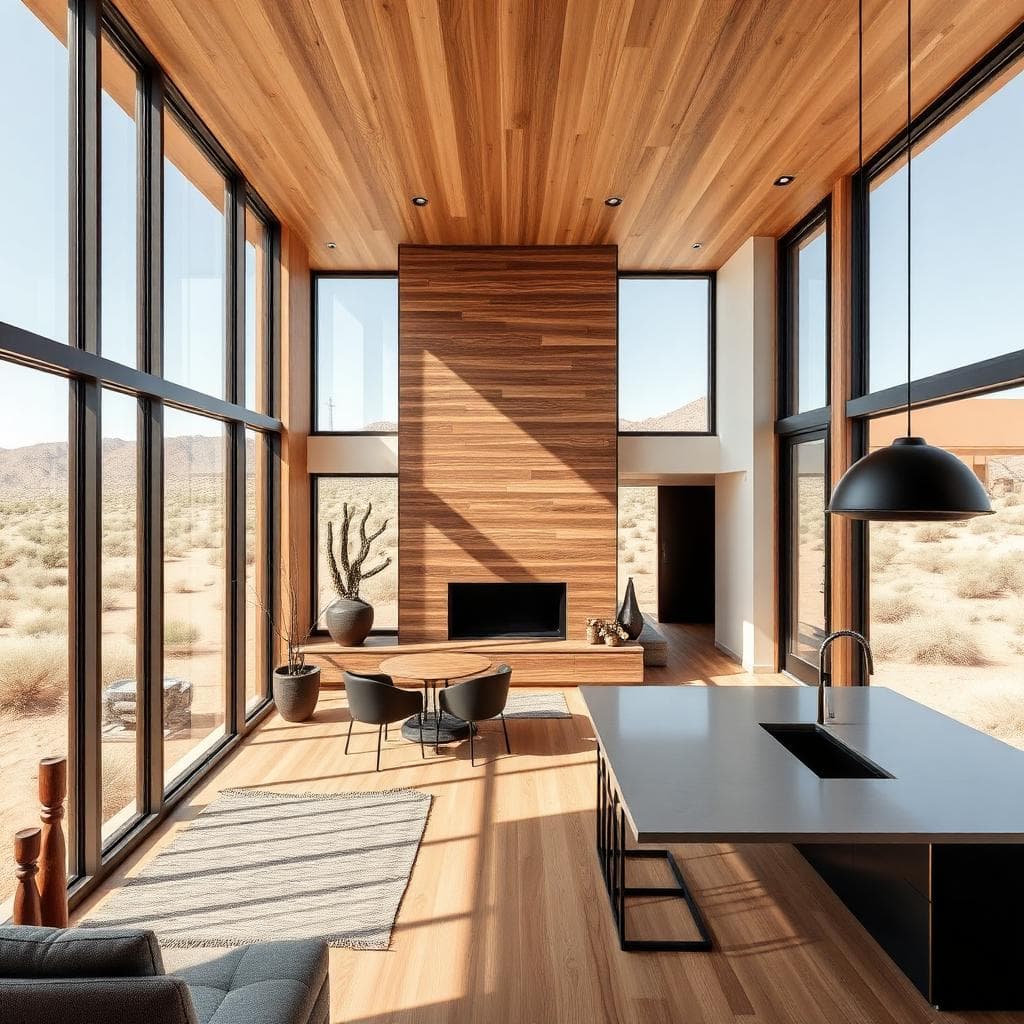
1. Desert Modern Everything
Warm white walls, natural wood ceilings, black steel windows, and rounded stucco arches. The Santa Fe earthtone era is back — with a cleaner, more architectural edge.
2. Indoor-Outdoor Living with Multi-Slide Doors
16- and 20-foot multi-slide pocket doors are the #1 add-on request. They turn an Arizona great room into a covered patio nine months a year. Pair with an outdoor living buildout for maximum impact.
3. Quartz Over Granite (Still)
Quartz dominates kitchen counters at a 4:1 ratio over granite. Veined whites and warm taupes are leading 2026 selections.
4. Walk-In Showers, No Tub
In master baths, the freestanding tub is fading. Curbless walk-in showers with linear drains are taking over — see our shower vs tub guide.
5. Black Plumbing & Hardware
Matte black faucets, cabinet pulls, and lighting still rule. Aged brass is the rising challenger.
6. LVP Throughout the Whole House
Luxury vinyl plank is now the default flooring in 70%+ of our remodels — durable, waterproof, and great for Arizona's expansive soils.
7. Xeriscape Front Yards
With water rates rising, grass-to-gravel conversions paired with mature desert plantings are paying off in both curb appeal and water bills.
8. Garage Conversions for Home Offices & ADUs
Mesa's ADU rules have loosened, and garage conversions are exploding — home offices, in-law suites, and rental units.
9. Energy-Smart Upgrades
Spray-foam attic insulation, dual-pane low-E windows, and 18+ SEER heat pumps are showing up on nearly every full renovation. Arizona summers make the ROI fast.
10. Whole-Home Lighting Plans
Recessed LED with tunable color temperature, dimmer-on-every-switch, and dedicated picture lighting. Lighting is no longer an afterthought.
Want to Build Any of These?
ProWorx specializes in modern desert renovations across the East Valley. Book a free consultation and we'll walk you through what these trends would cost in your home.
Efficiency Has Become the Headline
The clearest shift in Arizona renovation is that efficiency has moved from a nice-to-have to a primary driver. Sustained summer cooling costs have made homeowners genuinely interested in attic insulation, duct sealing, air sealing and window performance, which were previously afterthoughts behind kitchens and bathrooms.
This is a rational response to the local climate. Unlike most of the country, the dominant energy cost here is keeping heat out for half the year, and the measures that address it are comparatively inexpensive and deliver results every month.
Outdoor Living Built for Actual Use
Outdoor space has always mattered in Arizona, but the specification has matured. Uncovered concrete slabs in full sun are recognised as unusable for much of the year, and demand has moved toward genuine shade: properly engineered covered patios, pergolas, shade sails and ramadas built to handle monsoon wind loads.
Outdoor kitchens are specified with exterior-rated materials rather than repurposed indoor units, and lighter hardscape colours are chosen deliberately because surface temperature determines whether a space gets used barefoot.
Multi-Generational and Flexible Space
Demand for separate living space has grown sharply, driven by multi-generational households, adult children staying longer, and the permanence of remote work. Casitas, attached in-law suites and garage conversions are all requested far more than they were five years ago.
Arizona cities have been revisiting accessory dwelling unit rules in response, so what was not permitted a few years ago may be now. That makes current local requirements worth checking rather than assuming.
Home Offices That Are Actually Separate
The early pandemic pattern of working at a kitchen table has given way to demand for genuinely separate, acoustically sensible workspace. That is reshaping how open-plan enthusiasm is applied: homeowners still want kitchen and living connected, but increasingly want a door somewhere.
Practical requests include sound-dampening measures in walls, better lighting, dedicated circuits and data cabling, and sometimes converting a formal dining room nobody used into a room that gets used daily.
Aging in Place as Mainstream Design
Accessibility features have shed their institutional associations. Curbless showers, wider doorways, lever handles, comfort-height toilets, better lighting and blocking installed for future grab bars are now specified as ordinary good design rather than medical adaptation.
Arizona's large retiree population accelerates this, but the appeal is broader: these features make a home easier for everyone to use, and incorporating them during a planned remodel costs a fraction of retrofitting later.
Quieter Colour and Warmer Materials
The all-white interior has softened. Warm whites, greiges, muted greens and deeper blues are common, natural wood tones are returning as accents, and texture is being used more deliberately.
Fixture finishes have followed, with brushed brass, matte black and brushed nickel displacing polished chrome. In Arizona there is a practical reason as well as a fashionable one: brushed and matte finishes disguise the hard-water spotting that polished finishes advertise.
Durability Specified on Purpose
Material selection has become noticeably more practical. Porcelain tile and quality luxury vinyl plank dominate flooring because they handle dust, spills and heat. Quartz leads countertops because it needs no sealing. Exterior materials are chosen for ultraviolet resistance rather than appearance alone.
This is a meaningful change from a decade ago, when appearance drove more decisions and maintenance was discovered afterwards.
Water Awareness
Water consciousness shows up throughout Arizona renovations now: efficient fixtures, drought-tolerant landscaping replacing turf, drip irrigation, and interest in rainwater capture where it is permitted.
Hard water is driving its own decisions, with more homeowners installing softeners or conditioners to protect water heaters, appliances and plumbing, and specifying finishes that cope with mineral spotting.
Which Trends to Follow
Some of these will date and some will not. Efficiency work, layout improvements, electrical capacity, storage and accessibility features improve a home for as long as it stands. Colour palettes, hardware finishes and statement tile are cheaper to change and safer places to follow fashion.
If you intend to sell soon, lean toward broadly appealing choices and spend on the functional improvements. If you intend to stay, spend on what you will enjoy using every day.
Solar and the Order of Operations
Rooftop solar adoption continues to grow across Arizona, and with it a sequencing lesson worth knowing. Installing panels on an inefficient house means paying to generate power that is being wasted through an uninsulated attic and leaking ducts, and it means sizing a larger system than necessary.
Roof condition matters as much. If the roof is within a few years of replacement, replacing it before panels go on avoids an expensive removal and reinstallation later, a cost homeowners rarely anticipate. Doing the envelope work and the roof first, then solar, is the order that saves money.
Smart Home Features That Earn Their Place
Smart technology in Arizona renovations has narrowed toward things that solve real local problems rather than novelty. Smart thermostats that let the house drift warmer when empty genuinely reduce cooling costs. Leak detection sensors near water heaters, washing machines and under sinks catch failures early, and some can shut off the main supply automatically, which matters enormously in homes left empty for part of the year.
Irrigation controllers that adjust to weather reduce water use. These have staying power because they address the specific ways Arizona homes cost money, rather than simply adding connectivity.
Renovating for Resale Versus for Yourself
The most useful question before following any trend is how long you intend to stay. If a sale is within a few years, broadly appealing finishes and improvements that remove buyer objections return best, and highly personal choices rarely recover their cost. If you plan to stay a decade or more, the calculation reverses: spend on what you will use and enjoy daily, and treat resale value as secondary.
Either way, the improvements that reliably hold value in Arizona are the unglamorous ones: efficiency, electrical capacity, roofing, plumbing and a cooling system that works. Those remove objections rather than creating excitement, which is exactly why they age well.